
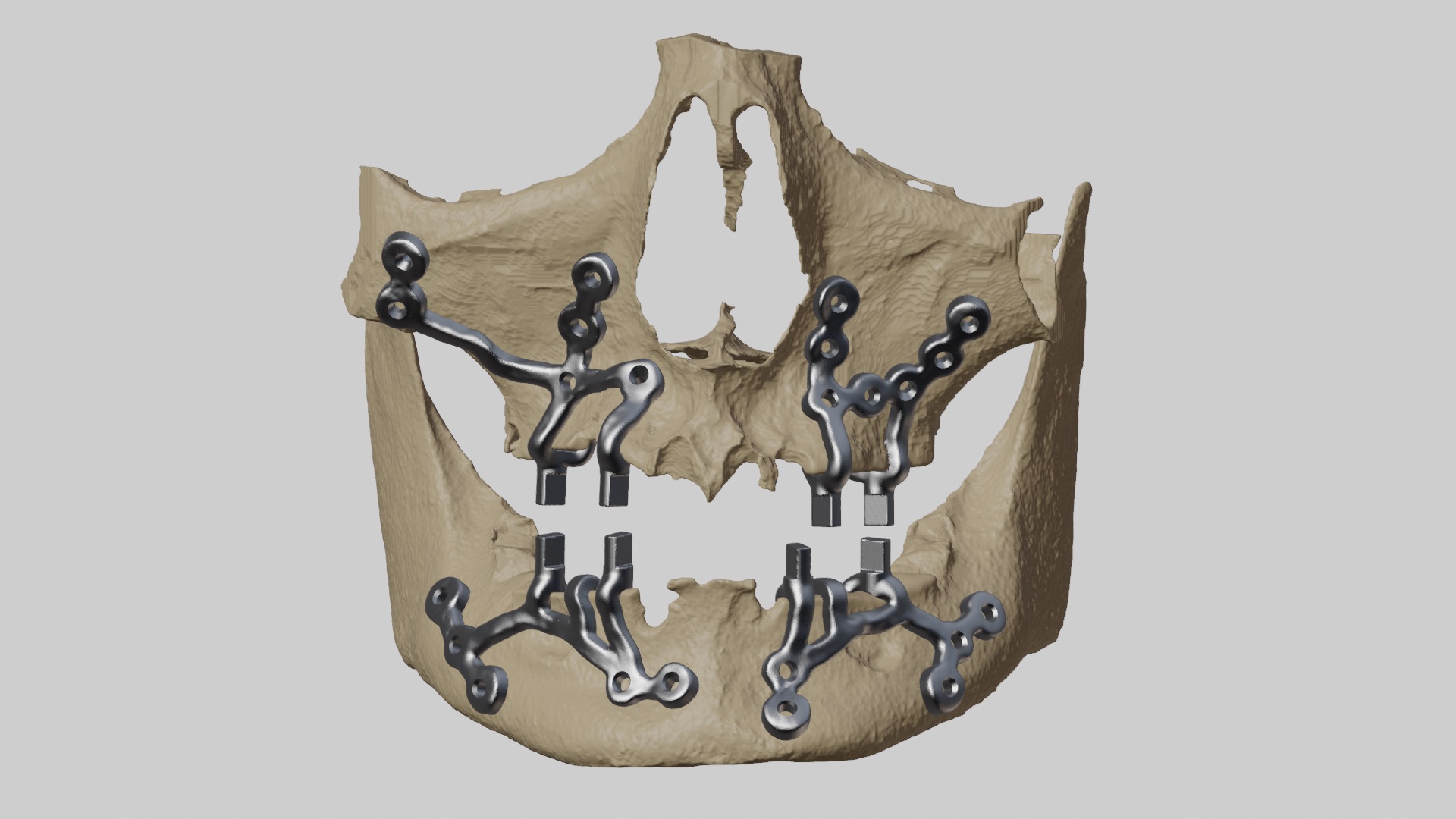
When Traditional Implants Are Not Enough… What’s Next?
For decades, severe maxillary atrophy has remained one of the most challenging conditions in implant dentistry. When bone volume is critically reduced, conventional implants often become impossible without extensive bone grafting—leading to longer treatment times, increased morbidity, and higher patient discomfort.
But a new era of digital dentistry is changing this reality.
Today, customized 3D-printed subperiosteal titanium implants are re-emerging as a powerful, minimally invasive alternative for patients.
CASE PRESENTATION
Patient Information
A 72-year-old female patient reported to the dental clinic with a chief complaint of complete loss of maxillary teeth and inability to chew effectively. The patient also expressed dissatisfaction with esthetics and difficulty in speech due to long-standing edentulism.
The patient desired a fixed prosthetic solution and explicitly wished to avoid invasive bone grafting procedures.
Medical and Dental History
- Medical history: Non-contributory, medically fit for surgery
- Dental history: Long-standing complete maxillary edentulism
- No history of systemic diseases affecting bone healing
- Good oral hygiene maintenance capability
Clinical Examination
Intraoral examination revealed:
- Complete edentulism of the maxillary arch
- Severe ridge resorption with flat palatal vault
- Reduced vestibular depth
- Poor anatomical support for conventional implant placement
Radiographic Assessment
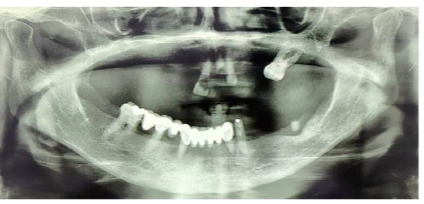
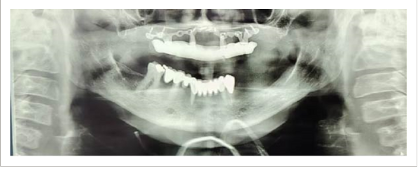
Cone Beam Computed Tomography (CBCT) revealed:
- Severely atrophic maxilla consistent with Cawood and Howell Class VI
- Residual bone height: <5 mm in most regions
- Residual bone width: <4 mm
- Inadequate bone volume for placement of endosseous implants without augmentation
Diagnosis
Severely atrophic maxilla (Cawood and Howell Class VI) unsuitable for conventional implant-supported rehabilitation without extensive bone grafting.
Treatment Objectives
- Provide a fixed full-arch prosthetic rehabilitation
- Avoid bone grafting procedures
- Minimize surgical morbidity and treatment duration
- Achieve long-term functional and esthetic stability
Treatment Planning
After multidisciplinary evaluation, a decision was made to proceed with a:
Custom-designed, 3D-printed subperiosteal titanium implant system
The digital workflow included:
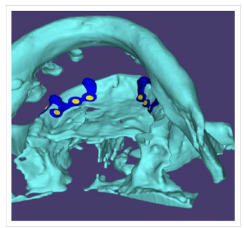
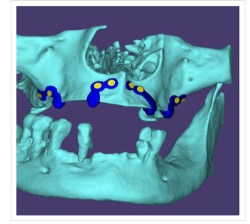
- CBCT-based 3D reconstruction
- CAD-based virtual implant design
- Finite Element Analysis (FEA) for stress distribution assessment
- Manufacturing using Titanium Ti6Al4V alloy via Direct Metal Laser Sintering (DMLS)
Surgical Procedure
The procedure was performed under local anesthesia.
- Full-thickness mucoperiosteal flap elevation
- Exposure of atrophic maxillary bone
- Passive adaptation of custom subperiosteal implant framework
- Fixation using titanium screws (multiple anchorage points)
- Flap repositioning and primary closure using resorbable sutures
- Immediate postoperative radiograph confirmed accurate implant positioning
Prosthetic Rehabilitation
- An immediate interim prosthesis was delivered within 48–72 hours
- After a healing period of approximately 3 months, a definitive screw-retained zirconia prosthesis was placed
- Occlusion, aesthetics, and phonetics were carefully adjusted
Outcome and Follow-Up
At 12-month follow-up:
- No signs of infection or soft tissue complications
- No implant exposure or mobility observed
- Radiographic evaluation showed stable implant positioning
- Patient reported excellent functional recovery and high satisfaction
- Visual Analog Scale (VAS) satisfaction score: 9.5/10
- No intraoperative or postoperative complications were recorded
- No neurosensory disturbances
- No soft tissue dehiscence
This case demonstrates that custom 3D-printed subperiosteal implants can provide a predictable alternative for patients with severe maxillary atrophy who are not candidates for conventional implant therapy.
Key advantages observed:
- Avoidance of bone grafting
- Reduced treatment time
- Immediate functional rehabilitation
- High patient satisfaction
However, long-term multicenter studies are still required to validate long-term success rates and standardize protocols.
Reference
Customized 3D-Printed Subperiosteal Titanium Implants for Prosthetic Rehabilitation of Atrophic Maxilla in Geriatric Patients: A Case Report