What if the most common beverages in the world are quietly influencing oral cancer risk?
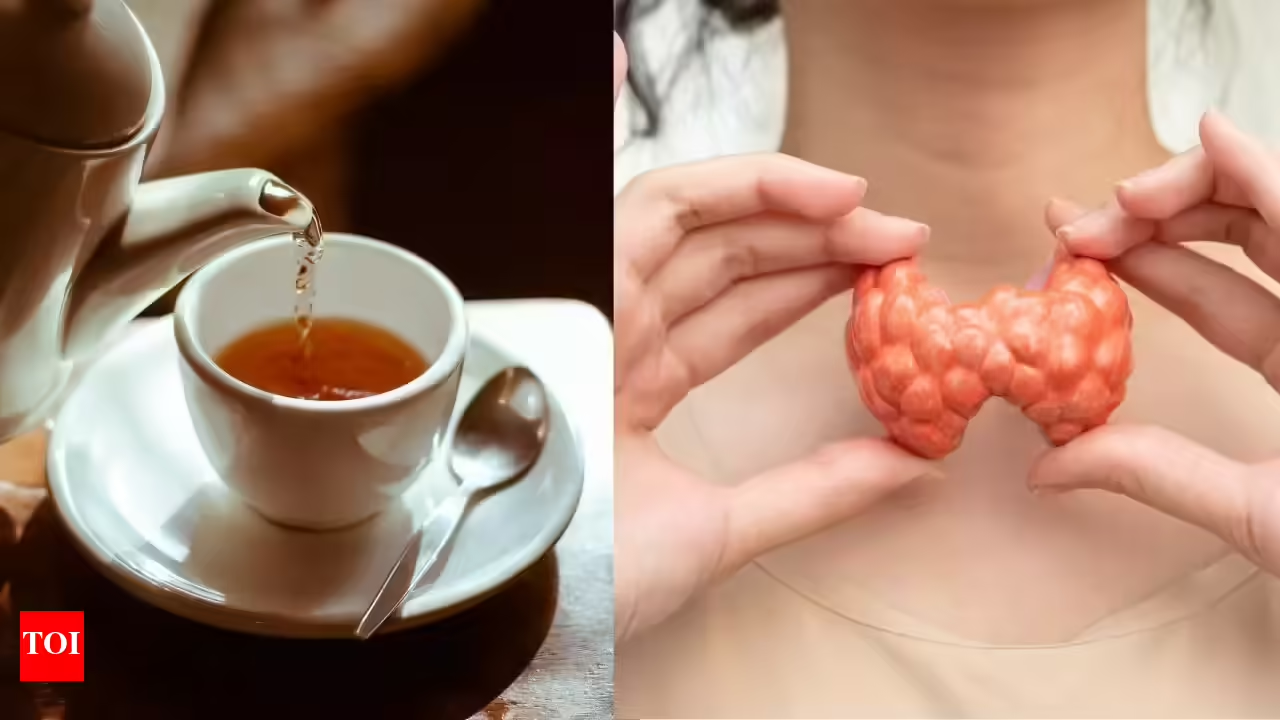
Beyond caffeine and comfort, coffee and tea may play a subtle role in head-and-neck cancer prevention-according to one of the largest pooled cancer analyses ever conducted.
This isn’t a trend.
It’s data from nearly 25,000 individuals.
Head-and-neck cancers remain among the most challenging conditions for early detection in dental practice. While tobacco and alcohol dominate risk discussions, dietary factors have often been overlooked.
Higher coffee intake and moderate tea consumption were linked with a lower risk of several head-and-neck cancers-but not all.
Key findings that catch attention
- More than 4 cups of caffeinated coffee per day showed a lower risk of oral cavity and oropharyngeal cancers.
- 3–4 cups daily were associated with reduced hypopharyngeal cancer risk.
- Even decaffeinated coffee showed protective signals for oral cavity cancer.
- Moderate tea intake showed benefit for some cancer sites.
- High tea intake, however, was linked to an increased risk of laryngeal cancer.
Why might coffee and tea matter?
Coffee and tea are rich in polyphenols, antioxidants, and anti-inflammatory compounds. Laboratory studies suggest these compounds can:
- Reduce oxidative stress
- Slow abnormal cell growth
- Support cellular repair mechanisms
Interestingly, the protective signals seen with decaffeinated coffee suggest that caffeine is not the only active player.
What this means for dental professionals
This study does not suggest prescribing coffee as prevention.
But it does reinforce an important message:
Oral cancer risk is multifactorial.
For dentists, this means:
- Continuing strong emphasis on tobacco and alcohol cessation
- Recognizing diet as a supportive, not dominant, factor
- Answering patient questions with evidence—not assumptions
- Remaining vigilant in routine oral cancer screening
Your patient’s daily cup of coffee isn’t a cure—but it may not be the villain we once assumed.
Early detection, lifestyle counseling, and regular dental examinations still save lives.
Reference
- Coffee and Tea Consumption and the Risk of Head and Neck Cancer
Journal: Cancer (American Cancer Society)
https://doi.org/10.1002/cncr.35620 - Beverage Consumption and Risk of Oral and Pharyngeal Cancer
Journal: Oral Oncology
https://www.sciencedirect.com/science/article/pii/S136883751930604X - Dietary Polyphenols and Their Role in Oral Cancer Prevention
Journal: Journal of Oral Pathology & Medicine
https://onlinelibrary.wiley.com/doi/10.1111/jop.13135