
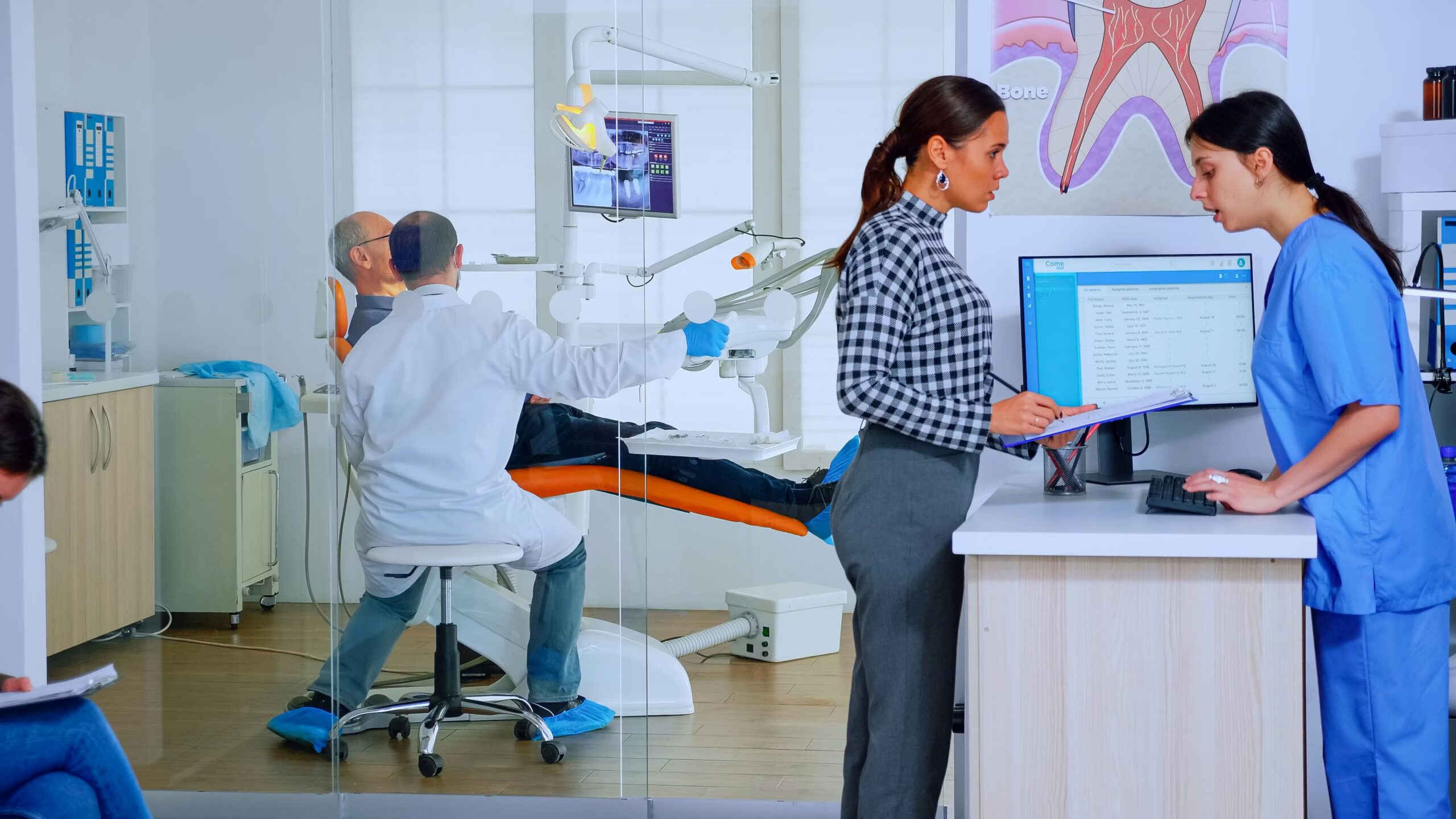
Running a dental clinic efficiently is more than treating patients—it’s about systems, consistency, and clarity. A well-documented SOP (Standard Operating Procedure) ensures your team knows exactly what to do, reduces errors, and saves precious time.
Here’s a full guide of SOPs for every aspect of dental practice:
1. Front Desk & Reception SOPs
Purpose: Ensure smooth patient flow, accurate records, and professional communication.
Key Steps:
- Appointment Scheduling:
- Use a digital calendar or software for all bookings.
- Confirm appointments via call, SMS, or email 24 hours before.
- Keep a buffer for emergencies and walk-ins.
- Patient Registration:
- Collect full demographics: name, contact, date of birth, and medical history.
- Gather insurance details and consent forms.
- Create a digital record for each patient; back up daily.
- Billing & Payments:
- Generate receipts for all payments, maintain proper logs.
- Track insurance claims and follow up on pending payments.
- Maintain a separate ledger for cash and card transactions.
- Patient Communication:
- Respond to calls and messages promptly.
- Provide clear instructions for pre/post-treatment care.
- Maintain a polite and professional tone at all times.
2. Clinical SOPs
Purpose: Deliver safe, standardized, and high-quality dental care.
Key Steps:
- Patient Examination:
- Conduct systematic extraoral and intraoral examinations.
- Record findings in detail: dental charts, photographs, and radiographs.
- Discuss preliminary diagnosis with the patient.
- Treatment Protocols:
- Follow a stepwise approach for each procedure (fillings, RCT, extractions).
- Maintain checklists for instruments and materials needed.
- Ensure pre-op and post-op instructions are provided.
- Sterilization & Infection Control:
- Clean all instruments, autoclave according to manufacturer guidelines.
- Disinfect operatories and high-touch areas between patients.
- Staff must wear PPE and follow universal precautions.
- Radiography & Diagnostics:
- Verify patient identity and exposure settings.
- Use protective gear (lead apron, thyroid shield).
- Record and store images digitally with proper labeling.
3. Inventory & Stock Management SOPs
Purpose: Avoid stockouts, reduce wastage, and save costs.
Key Steps:
- Maintain a list of all consumables and materials.
- Check stock levels weekly; reorder before reaching minimum levels.
- Store items per manufacturer instructions; avoid expired materials.
- Conduct monthly audits to monitor usage patterns and identify wastage.
4. Daily Operations Checklist
Purpose: Ensure consistency and efficiency in clinic operations.
Morning Setup:
- Switch on all equipment (chair, autoclave, compressor).
- Check sterilization logs and prepare clinical trays.
- Review patient schedule and assign staff duties.
During Clinic Hours:
- Maintain operatories in clean and ready-to-use condition.
- Assist staff in patient flow, document treatments.
- Monitor and address any operational issues immediately.
Evening Wrap-Up:
- Clean and disinfect all operatories.
- Shut down equipment safely.
- Dispose of biomedical waste as per regulations.
- Update records and close day’s schedule.
5. Emergency & Safety SOPs
Purpose: Ensure patient and staff safety at all times.
Medical Emergencies:
- Keep a fully stocked emergency kit accessible.
- Staff must be trained in CPR, basic first aid, and handling syncope, anaphylaxis, or seizures.
Fire Safety:
- Conduct monthly checks of fire extinguishers.
- Maintain a visible evacuation plan for all staff.
Equipment Failure:
- Keep troubleshooting guidelines for critical equipment.
- Maintain service contacts for quick repairs.
6. Staff Management SOPs
Purpose: Streamline roles, responsibilities, and performance.
Key Steps:
- Clearly define staff duties for clinical and administrative work.
- Conduct weekly briefings to discuss workflow and updates.
- Track attendance, leaves, and performance consistently.
- Provide regular training on equipment, protocols, and software.
7. Patient Feedback & Quality Control SOPs
Purpose: Continuously improve patient experience and clinic standards.
Key Steps:
- Collect feedback at the end of each visit via forms or digital surveys.
- Review complaints and suggestions weekly; implement improvements.
- Maintain checklists for treatment quality and procedural accuracy.
- Conduct monthly audits of patient satisfaction and operational efficiency.
8. Research, Documentation & Compliance SOPs
Purpose: Maintain legal and academic standards while enabling professional growth.
Key Steps:
- Document all patient records accurately: treatments, images, prescriptions.
- Follow ethical guidelines and local regulations for patient care.
- Track training logs, adverse events, and clinical audits.
- Stay updated with continuing dental education and certifications.
9. Marketing & Patient Engagement SOPs
Purpose: Build your practice, attract new patients, and retain loyal ones.
Key Steps:
- Maintain consistent social media updates and patient newsletters.
- Follow up post-treatment with care instructions and reminders.
- Encourage reviews and referrals in a professional manner.
- Track marketing campaigns and assess ROI periodically.
Why SOPs Matter for Dentists
- Reduce errors and miscommunication.
- Save time and improve efficiency.
- Maintain high-quality patient care.
- Make onboarding new staff faster and easier.
- Boost patient satisfaction and trust.
With these SOPs, your clinic will run smoothly, staff will be confident, patients will be happy, and you can focus on growing your practice and your career.