What if a loose denture could be relined digitally in just a few days—without messy impressions or multiple clinic visits?
With the rise of digital dentures and 3D printing, denture relining is entering a completely new era.
Traditionally, relining involved impression materials, laboratory steps, and long waiting periods. But modern digital workflows and advanced soft liner materials are now allowing dentists to deliver faster, cleaner, and more precise relining solutions.
Why Traditional Relining Had Limitations
Conventional relining materials were developed mainly for acrylic denture bases. When digital dentures made from 3D-printed polymers entered dentistry, many of these materials did not bond well, leading to reduced durability and fit.
Today, manufacturers are introducing new-generation relining materials specifically engineered for digital dentures, solving one of the biggest challenges in digital prosthodontics.
New Digital Relining Solutions Dentists Should Know
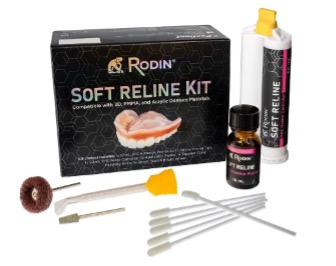
Rodin™ Soft Reline (CM Medical / Pac-Dent)
A modern silicone-based soft liner developed to bond effectively with 3D-printed denture base polymers, PMMA, and traditional acrylic dentures. It allows clinicians to improve denture fit without remaking the entire prosthesis.
GC RELINE™ II
A vinyl polysiloxane (VPS) soft relining material known for strong adhesion, flexibility, and patient comfort. It works well for both conventional and digital denture systems.
DSI Ultrasil Reline
A silicone soft liner delivered through automix cartridges, enabling quick and clean chairside relining procedures with minimal odor.
Dandy Digital Reline Workflow
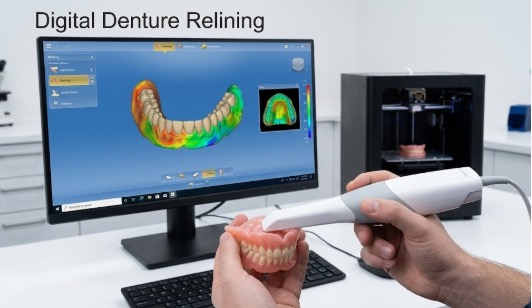
A fully digital workflow where the existing denture is scanned, digitally modified, and relined in just a few days, significantly reducing clinical appointments.
Why Digital Relining Is Gaining Attention
Modern relining systems offer several advantages:
Better bonding to 3D-printed denture bases
Faster chairside procedures
Improved comfort for patients with thin or sensitive ridges
Odorless, tasteless soft liners
Digital records that allow dentures to be reproduced anytime
Reduced need for repeated impressions
For many patients, this means better chewing efficiency, improved speech, and enhanced denture stability.
How the Digital Reline Workflow Works
Scanning – The patient’s existing denture is scanned using an intraoral or lab scanner.
Digital Design – Software modifies the intaglio surface to improve adaptation to the mucosa.
Manufacturing – The updated denture base is 3D printed or milled using digital design files.
Application – Advanced soft liner materials are applied for final comfort and retention.
Why This Matters for Modern Dental Practice
Digital denture relining allows dentists to extend the life of existing dentures while maintaining digital precision. Instead of remaking the prosthesis, clinicians can now provide faster adjustments, fewer patient visits, and improved outcomes.
As digital dentistry continues to expand, innovations like these are helping dentists deliver smarter, more efficient prosthodontic care.
In the near future, digital relining may become a routine part of digital denture maintenance.
References
- Introducing the Next Generation Denture Reline Material – Decisions in Dentistry
https://decisionsindentistry.com - 3 Things You Should Know About Relining 3D Printed Dentures – DDS Lab
https://blog.ddslab.com/3-things-you-should-know-about-relining-3d-printed-dentures