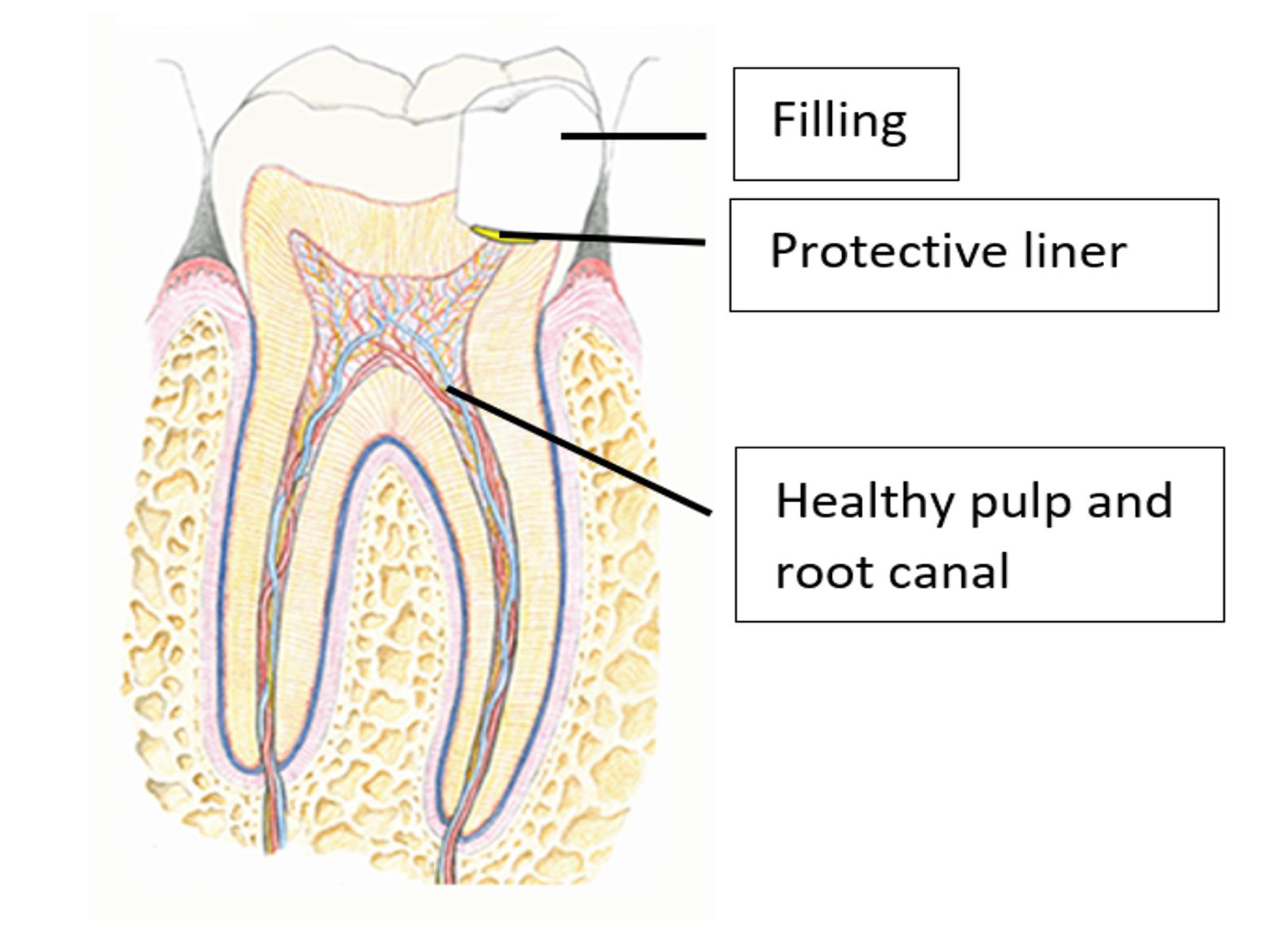
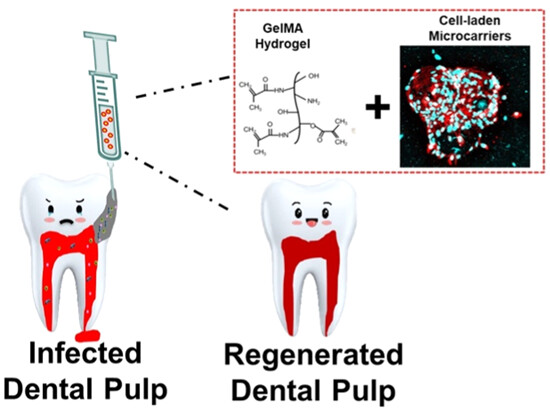
For more than a century, restorative dentistry has been built around one core principle: remove diseased tissue, seal the space, and restore structure. That approach has saved countless teeth-but it has also set a hard limit. Once the pulp is compromised, vitality is rarely restored.
Today, that limit is being challenged by a new generation of injectable composite hydrogels designed not just to repair damage, but to activate regeneration inside the tooth.
From Filling Space to Engineering Biology
Unlike conventional pulp-capping agents or endodontic materials, injectable composite hydrogels are engineered as bioactive systems, not inert fillers. Their purpose is to create a controlled microenvironment that supports healing at the cellular level.
These materials combine:
- Injectable delivery for precise, minimally invasive placement
- Light-curable behavior familiar to restorative workflows
- Mechanical stability compatible with definitive restorations
- Bioceramic components that release ions linked to dentine regeneration
The result is a material that handles like a composite but functions as a regenerative scaffold.
Mechanism of Injectable Composite Hydrogels
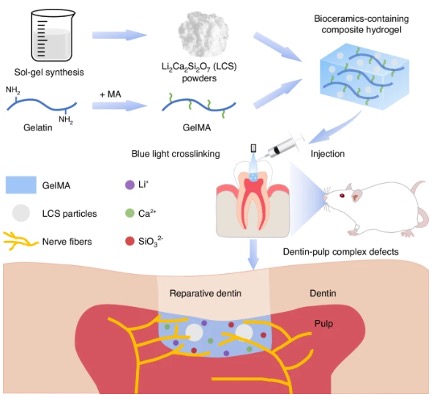
- Injectable composite hydrogels work by combining an ECM-like polymer matrix with bioactive bioceramic particles in a single, light-curable system.
- Once injected into the pulp space, the hydrogel provides a three-dimensional scaffold that supports cell survival and migration, while the incorporated bioceramics release calcium and silicate ions that stimulate odontogenic differentiation and dentine formation.
- At the same time, the matrix supports nerve-associated cells, enabling nerve guidance and potential re-innervation of the regenerated pulp tissue.
- Rather than acting as a passive filler, the material functions as a biologically instructive scaffold that actively directs pulp–dentin regeneration.
Designed for the Living Pulp
What makes this innovation particularly compelling is its biological ambition. True pulp regeneration requires more than mineral deposition—it requires coordination between different cell populations.
Injectable composite hydrogels have demonstrated the ability to support:
- Dental pulp stem cells, driving dentine formation
- Nerve-supporting cells, essential for pulp innervation
By enabling both processes within the same material, these composites move closer to restoring functional pulp tissue, not just anatomical repair.
What Early Studies Suggest
Preclinical investigations have shown promising outcomes, including:
- Formation of organized, pulp-like tissue
- Enhanced mineral density in regenerated dentine
- Evidence of nerve fiber ingrowth within the pulp space
While still experimental, these findings represent a meaningful shift toward restoring vitality rather than eliminating it.
The Bigger Shift
Injectable composite hydrogels reflect a broader transformation in dental materials science—from passive protection to biologically intelligent design.
Dentistry is no longer limited to sealing what remains.
It is beginning to guide tissues to rebuild themselves.
The future of pulp therapy may not lie in what we remove-but in what we inject.
REFERANCE
- An injectable bioceramics-containing composite hydrogel promoting innervation for pulp–dentin complex repair
This study describes an injectable composite hydrogel with bioceramics that supports both odontogenic and nerve growth, highlighting functional pulp–dentin regeneration. (Nature)
https://www.nature.com/articles/s41368-025-00398-0 - Dual-functional injectable hydrogels as antimicrobial and angiogenic therapeutics for dental pulp regeneration
This article investigates an injectable hydrogel system designed for antimicrobial activity and enhanced angiogenesis in pulp regeneration. (RSC Publishing)
https://pubs.rsc.org/en/content/articlelanding/2025/tb/d5tb00559k - Injectable Xenogeneic Dental Pulp Decellularized Extracellular Matrix Hydrogel Promotes Functional Dental Pulp Regeneration
This research shows a dental pulp decellularized ECM hydrogel with excellent injectability and ability to support stem cell survival, differentiation, and angiogenesis. (mdpi.com)
https://www.mdpi.com/1422-0067/24/24/17483