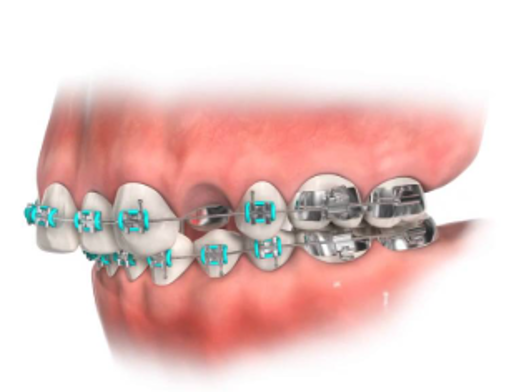
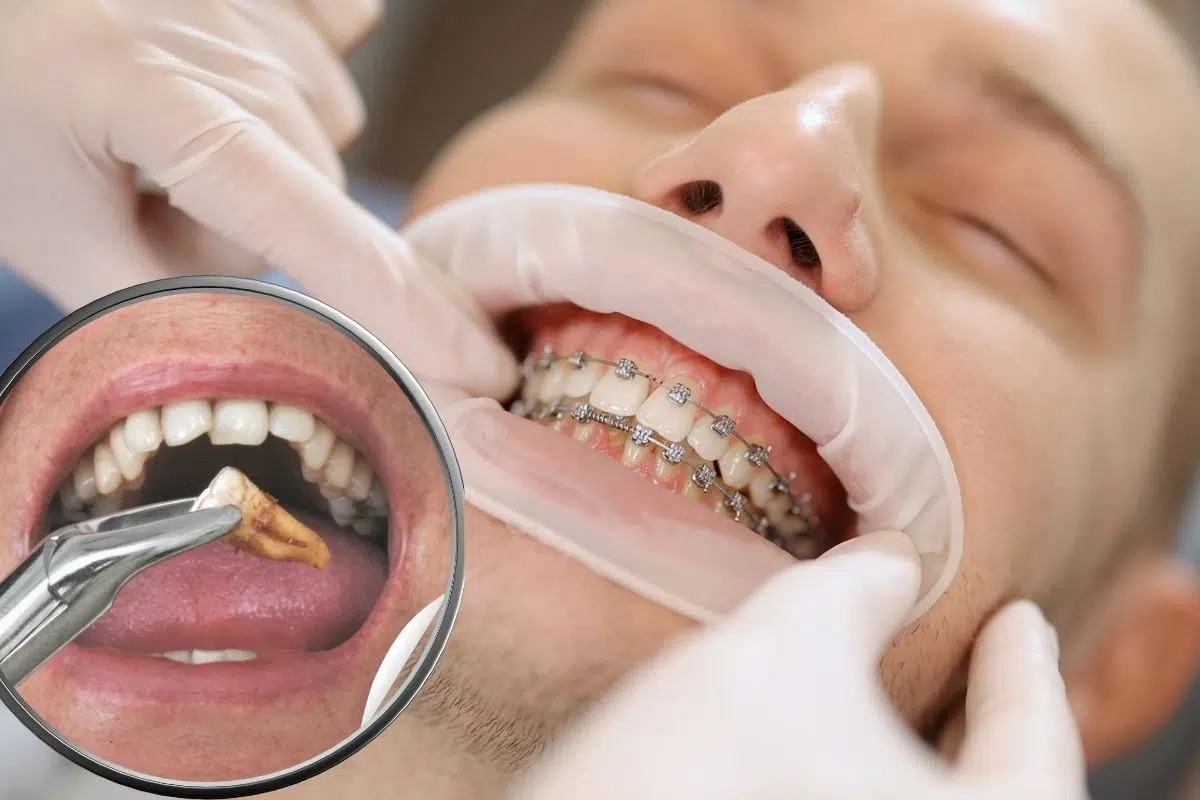
Could One Clinical Decision Influence Orthodontic Success?
When planning orthodontic treatment, one question continues to spark debate among orthodontists:
Should teeth be extracted before braces, during treatment, or after alignment begins?
While this decision has traditionally been based on clinical experience and treatment mechanics, new scientific evidence suggests there’s much more happening beneath the surface.
A recent randomized clinical trial explored how the timing of tooth extraction influences bone remodeling and periodontal activity during the early stages of orthodontic treatment. The findings provide valuable insights into the biological processes that may shape future orthodontic protocols.
Why Extraction Timing Matters
Orthodontic tooth movement is far more than simply applying force to teeth.
Every adjustment activates a complex biological response involving:
- Periodontal ligament remodeling
- Bone resorption and new bone formation
- Cellular signaling
- Enzymatic activity
- Tissue healing
When a tooth is extracted, the surrounding bone immediately enters a healing phase known as the Regional Acceleratory Phenomenon (RAP)—a temporary period of increased bone remodeling.
The big question researchers wanted to answer was:
Does combining orthodontic treatment with this natural healing response change the biological environment?
The Study at a Glance
Researchers enrolled 60 orthodontic patients requiring extraction of the upper first premolars due to moderate dental crowding.
Participants were randomly assigned to three treatment groups:
Group 1
Leveling and alignment began first.
Extractions were delayed for six weeks.
Group 2
Only tooth extraction was performed.
No orthodontic forces were applied during the observation period.
Group 3
Extractions and orthodontic alignment were initiated on the same day.
Over six weeks, researchers measured alkaline phosphatase (ALP) levels in gingival crevicular fluid (GCF)—a well-established biomarker of bone formation and osteoblastic activity.
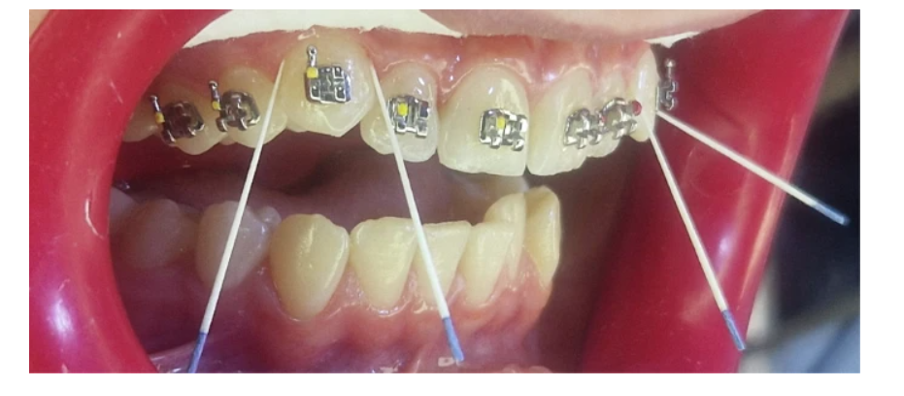
Method of sample collection using paper points.
Why ALP Is an Important Biomarker
Alkaline phosphatase (ALP) acts as an early indicator of new bone formation.
Higher ALP activity generally reflects:
- Increased osteoblastic activity
- Active bone remodeling
- Healing around teeth
- Biological response to orthodontic forces
Monitoring ALP allows researchers to observe biological changes long before they become visible clinically.
What Did the Researchers Discover?
Extraction Alone Produced the Strongest Biological Response
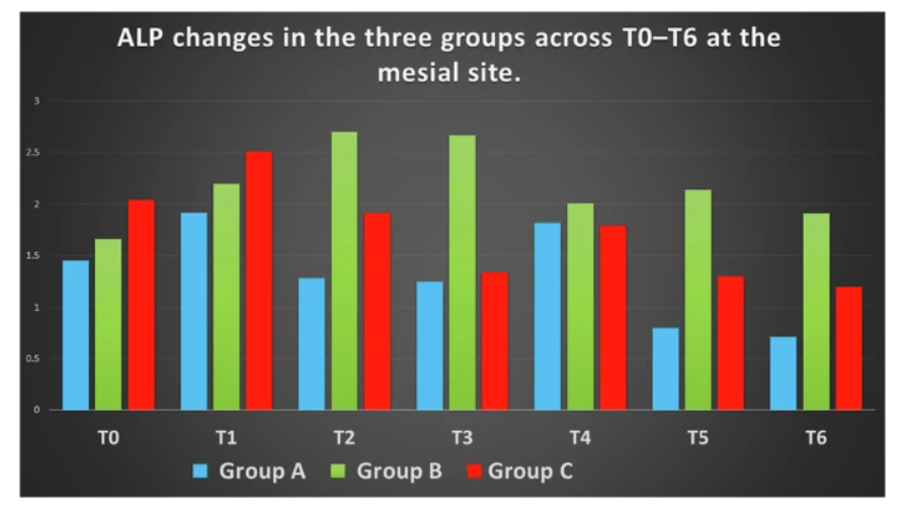
Patients who underwent tooth extraction without immediate orthodontic force showed the highest ALP activity throughout most of the study.
This indicates that extraction alone stimulates a significant healing and bone remodeling response.
Simultaneous Extraction and Orthodontics Produced Intermediate Activity
When orthodontic alignment started immediately after extraction, ALP activity increased—but not as dramatically as extraction alone.
This suggests that the biological responses from healing and orthodontic force interact in complex ways rather than simply adding together.
Alignment Without Extraction Showed the Lowest Activity
Patients who received only leveling and alignment exhibited the smallest increase in ALP levels.
Early orthodontic forces generated biological activity, but it was considerably less pronounced than the response triggered by tooth extraction.
What Does This Mean for Orthodontists?
The study confirms that extraction timing significantly influences early biological activity within periodontal tissues.
Although higher ALP activity does not automatically mean faster tooth movement, the findings suggest that extraction-related bone remodeling creates a biologically active environment that may influence future treatment strategies.
These insights could eventually help clinicians:
- Optimize extraction protocols
- Better understand bone healing
- Improve treatment planning
- Personalize orthodontic care
- Explore biologically guided treatment approaches
A Word of Caution
While the results are promising, researchers emphasize that this study measured biological markers—not actual tooth movement speed.
Additional clinical research is still needed to determine whether these biochemical changes translate into shorter treatment times or improved orthodontic outcomes.
The Future of Biologically Guided Orthodontics
Modern orthodontics is moving beyond mechanics alone.
Today, researchers are exploring biomarkers that reveal what’s happening at the cellular level during treatment.
Understanding these biological signals may eventually allow orthodontists to:
- Predict treatment response
- Customize force application
- Improve efficiency
- Reduce treatment duration
- Enhance patient outcomes
Studies like this represent an important step toward more precise, evidence-based orthodontic care.
Tooth extraction has long been viewed simply as a method for creating space. However, this research highlights its powerful biological effects on bone remodeling and periodontal tissues.
While extraction timing may not yet change routine clinical practice, understanding how it influences the body’s natural healing processes opens exciting opportunities for future orthodontic innovations.
As science continues to uncover the biology behind tooth movement, personalized orthodontic treatment may become more accurate, predictable, and efficient than ever before.
Reference
Alkaline phosphatase activity in gingival crevicular fluid during orthodontic treatment with different extraction protocols for maxillary canines: a randomized controlled trial
Can the timing of tooth extraction speed up orthodontic treatment?
Researchers tracked a key bone biomarker and uncovered surprising results that every orthodontist should know.
Find out what they discovered!