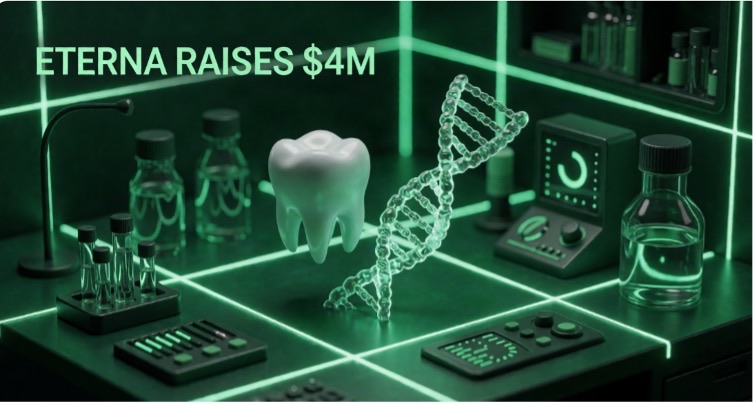
What if future enamel care could focus on rebuilding lost enamel rather than simply managing its consequences? A new keratin-based enamel regeneration technology developed by researchers at King’s College London is moving closer to commercial development following a reported £3 million investment.
The technology is being developed by Eterna Regeneratives, a startup founded by Sherif Elsharkawy, a clinical lecturer in prosthodontics at King’s College London, and PhD candidate and CEO Khaled Eissa. The company is developing regenerative biomaterials based on naturally derived molecules.
A different approach to enamel loss
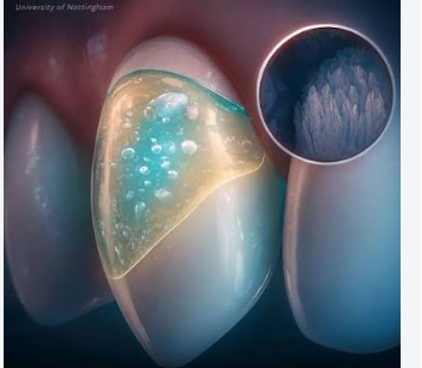
Unlike conventional approaches that focus on managing sensitivity, restoring lost structure or replacing damaged tissue, the technology aims to encourage the formation of an enamel-like layer directly on the tooth surface.
The approach uses keratin in a biomimetic mineralisation process designed to recreate a structure similar to natural enamel.
Laboratory work by Sherif Elsharkawy and PhD student Sara Gamea on extracted teeth reportedly found that the keratin-derived layer was almost as hard and mechanically strong as healthy enamel.
From laboratory research to clinical applications
The research has now been developed into a patented technology, with Eterna Regeneratives targeting potential commercial development by early 2027.
Potential applications currently under development include:
- A mouthwash-based product
- Professional dental products
- Regenerative approaches for enamel loss
- Future applications in broader tissue and bone regeneration
However, the technology is not yet a commercially available clinical treatment. Further development, testing and regulatory processes are required before products can reach the market.
A technology to watch
The reported investment from Hoxton Ventures and The Venture Collective is intended to help accelerate development toward the commercial market. Eterna says its longer-term goal is to move oral care from simply managing enamel loss toward actually repairing damaged enamel.
For now, the technology remains in the development and testing stage. But the combination of keratin-based biomaterials, biomimetic mineralisation and enamel regeneration represents an emerging area that could be significant for restorative and preventive dentistry.
Reference
£3m investment moves enamel regeneration technology closer to market