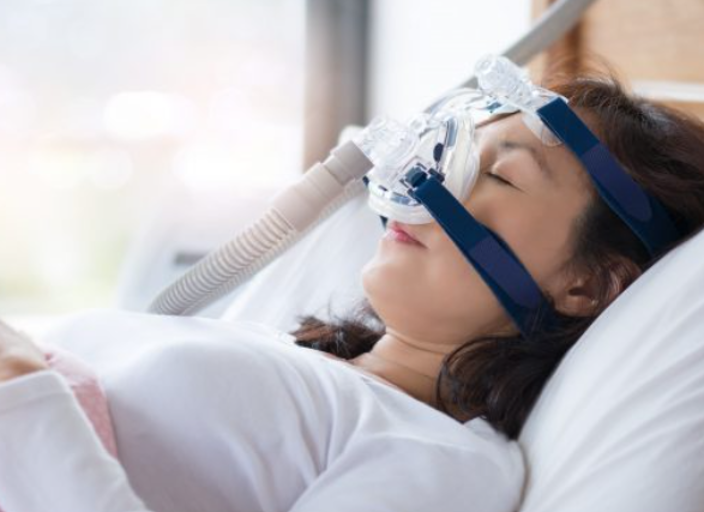
For years, Continuous Positive Airway Pressure (CPAP) has remained the gold standard for treating Obstructive Sleep Apnea (OSA). Unfortunately, many patients struggle to tolerate the mask, leading to poor compliance and untreated disease.
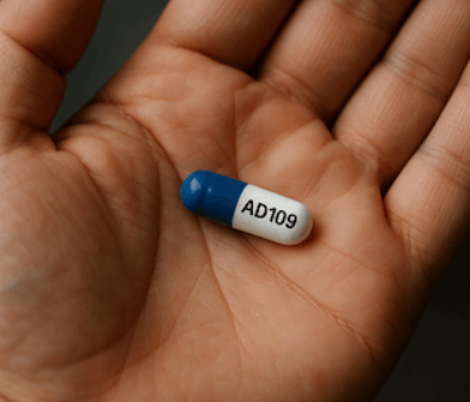
Now, researchers have reported encouraging results from a Phase 3 clinical trial evaluating AD109, an investigational oral medication that may become the first effective oral drug for obstructive sleep apnea.
While the findings are exciting, the study also highlights important limitations that dental professionals should understand.
Why This Matters to Dentists
Dentists are increasingly involved in sleep medicine, particularly through:
- Oral Appliance Therapy (Mandibular Advancement Devices)
- Screening for undiagnosed sleep apnea
- Airway assessment
- Management of snoring
- Collaboration with sleep physicians
If approved, AD109 could become another treatment option alongside oral appliances rather than replacing them.
What is Obstructive Sleep Apnea?
Obstructive Sleep Apnea occurs when the muscles of the upper airway repeatedly relax during sleep, causing temporary blockage of airflow.
This results in:
- Loud snoring
- Interrupted breathing
- Oxygen desaturation
- Poor sleep quality
- Daytime fatigue
- Increased cardiovascular risk
Worldwide, nearly 1 billion people are estimated to suffer from OSA.
What is AD109?
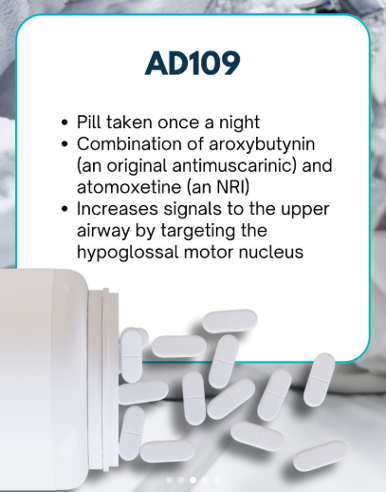
AD109 is an investigational oral medication combining:
- Atomoxetine (75 mg) – a selective norepinephrine reuptake inhibitor that increases upper airway muscle tone.
- Aroxybutynin (2.5 mg) – an antimuscarinic drug that reduces muscle relaxation contributing to airway collapse.
Instead of mechanically opening the airway like CPAP or oral appliances, AD109 works by improving neuromuscular control of the upper airway during sleep.
About the Phase 3 SynAIRgy Trial
Researchers conducted the SynAIRgy Trial, a large multicenter study across the United States and Canada.
Study Design
- Randomized
- Double-blind
- Placebo-controlled
- Phase 3 trial
- Treatment duration: 26 weeks
Participants
- 646 adults enrolled
- Mild to severe OSA
- Age ≥18 years
- Unable to tolerate or refused CPAP
- Baseline AHI between 10–45 events/hour (after protocol revision)
Patients with significant cardiovascular disease, craniofacial syndromes, narcolepsy, severe insomnia, and certain neurological disorders were excluded.
Primary Outcome
Researchers measured changes in the:
Apnea-Hypopnea Index (AHI)
AHI measures the number of breathing interruptions per hour of sleep.
Lower AHI = better sleep apnea control.
Key Results
Significant Improvement in Airway Obstruction
Compared with placebo:
- Average AHI decreased by 3.3 events/hour
- Placebo-adjusted improvement:
−4.0 events/hour - Benefits appeared as early as 4 weeks
Better Oxygen Levels During Sleep
Participants taking AD109 experienced:
- Reduced Oxygen Desaturation Index (ODI)
- Lower hypoxic burden
- Improved nighttime oxygenation
These improvements suggest more stable breathing during sleep.
Disease Severity Improved
Among AD109 users:
- 41.8% improved to a less severe OSA category.
- 17.6% achieved complete disease control (AHI <5 events/hour).
- 17.2% experienced at least a 70% reduction in AHI (vs. 8.9% with placebo).
What Didn’t Improve?
Despite improvements in breathing, patient-reported outcomes were less encouraging.
The study found no statistically significant difference between AD109 and placebo in:
- Daytime fatigue (PROMIS-Fatigue)
- Sleep impairment scores (PROMIS-Sleep Impairment)
This means objective breathing improved, but patients did not consistently report feeling noticeably better.
Safety and Side Effects
The biggest concern was tolerability.
Common Side Effects
- Dry mouth
- Nausea
- Insomnia
- Urinary hesitation
Treatment Discontinuation
Approximately 20% of participants stopped AD109 because of side effects, most occurring shortly after treatment began.
Importantly:
- No treatment-related serious adverse events were identified.
- No deaths occurred.
- Serious adverse events were considered unrelated to the medication.
Clinical Implications for Dentists
Although AD109 is not yet FDA-approved, the findings are highly relevant to dental sleep medicine.
Dentists should recognize that future OSA management may involve:
- Oral appliances
- Pharmacologic therapy
- Weight-loss medications
- Behavioral interventions
- Combination treatment strategies
Patients who cannot tolerate CPAP may eventually benefit from individualized combinations of these approaches.
Limitations of the Study
While promising, several important limitations remain:
- Investigational drug—not yet approved for routine clinical use.
- Symptom improvement was not significantly better than placebo.
- High discontinuation rate due to side effects.
- Longer-term safety and effectiveness require further study.
The Future of Sleep Dentistry
The SynAIRgy Phase 3 trial suggests that AD109 could become the first effective oral medication for obstructive sleep apnea, offering hope to patients who cannot tolerate CPAP. The drug demonstrated meaningful improvements in breathing and oxygenation during sleep, but its real-world adoption may be limited by side effects and early treatment discontinuation. For dentists involved in airway and sleep medicine, this development highlights the expanding role of collaborative care and the potential for future combination therapies.
Reference
Aroxybutynin and atomoxetine (AD109) for obstructive sleep apnea: a randomized phase 3 trial (SynAIRgy). American Journal of Respiratory and Critical Care Medicine. 2026.