
A new review published in is exploring how fermented plant-based foods such as kimchi and sauerkraut could influence the microbes living in the mouth and gut.
Researchers from the University of Pennsylvania and Jeonbuk National University propose that fermented foods could eventually be developed into precision-nutrition strategies designed around the microbiome.
Your mouth is more than just teeth
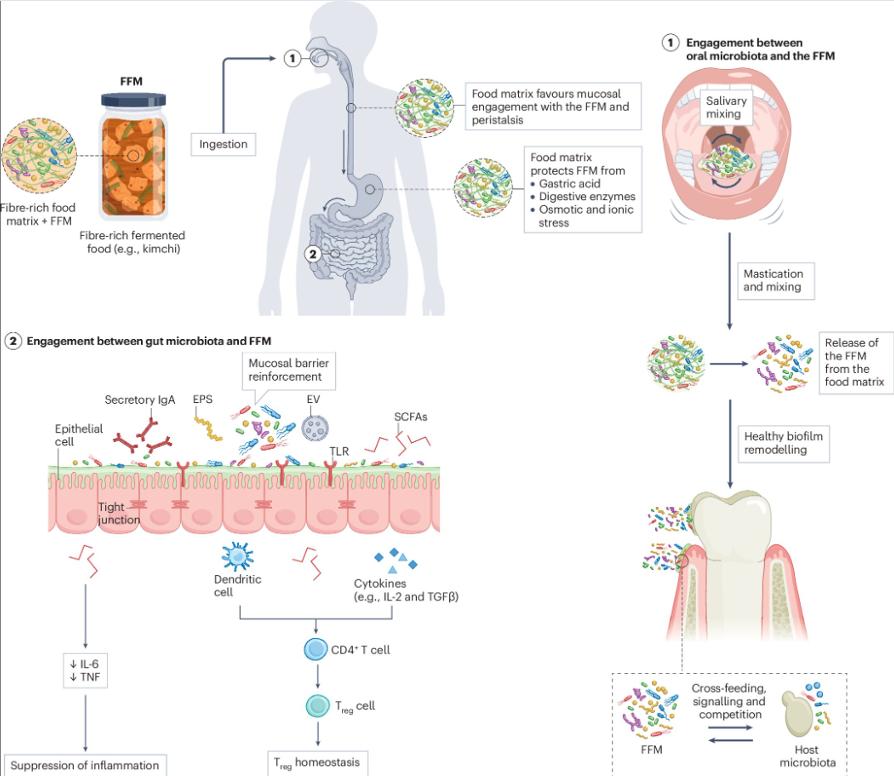
The oral cavity is home to a complex microbial ecosystem. These microorganisms interact with food, saliva, the immune system and other microbes—and what happens in the mouth may also influence the wider oral–gut axis.
Fermented plant foods are particularly interesting because they can contain:
- Diverse live microorganisms
- Microbial metabolites
- Plant-derived bioactive compounds
- Fiber-rich food structures
Rather than simply delivering “probiotics,” fermented foods may provide a combination of microbes and beneficial compounds.
Why fermented vegetables?
The researchers point out that plant-based fermented foods differ from traditional liquid probiotics such as yogurt.
Their solid food matrix may help deliver microorganisms while simultaneously providing phytochemicals and other compounds that could have biological effects.
This opens an intriguing possibility:
Could food be designed to selectively support healthier microbial communities in the mouth and gut?
From fermented food to “precision nutrition”
The researchers aren’t saying that eating kimchi will automatically prevent cavities or periodontal disease.
Instead, they propose a roadmap for future research.
Scientists could potentially:
Identify specific microbes → understand their metabolites → determine how they interact with the oral and gut microbiome → develop foods with defined microbial and chemical profiles.
That could eventually move fermented foods from traditional dietary choices toward microbiome-informed nutrition.
What could this mean for dentistry?
For dentists, this research reinforces a growing idea:
Oral health may be influenced by far more than brushing and flossing.
Diet, microbial ecology, inflammation and the gut may all be interconnected.
Future research could investigate whether specific fermented foods or their microbial metabolites can influence conditions such as caries, periodontal inflammation, oral dysbiosis or halitosis.
But for now, these are research possibilities—not established clinical treatments.
The bigger picture
Dentistry is increasingly moving from simply treating the consequences of microbial imbalance to understanding how we might shape the oral microbiome itself.
And that raises a fascinating question:
Could your next oral-health intervention come from the kitchen rather than the dental chair?
The answer isn’t here yet—but fermented foods may give researchers a new way to explore it.
Reference
Turning Fermented Plant-Based Foods into Precision-Nutrition for Oral and Gut Health