What if treating a child’s malocclusion meant looking beyond the teeth?
A new development in pediatric orthodontics is putting the spotlight on something much broader: craniofacial growth, airway-related screening, mandibular position and oral function.
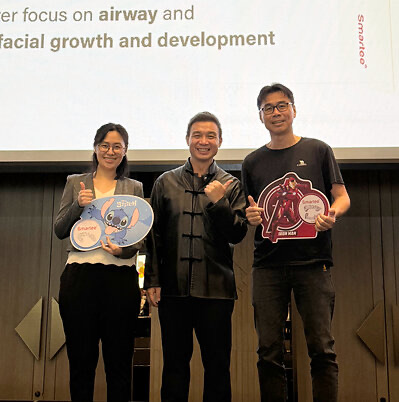
Smartee Denti-Technology has launched Smartee AG KIDS in Malaysia, introducing a craniofacial growth guidance system designed for growing patients aged 3 to 16 years.
The launch took place in Kuala Lumpur on August 25, 2026, alongside a one-day clinical program titled “Airway & Growth,” attended by around 130 dental professionals. The program was led by Dr Yue Weng Cheu, Clinical Director of DP Dental in Singapore.
From “Straighten the Teeth” to “Guide the Growth”
Traditional pediatric orthodontic thinking often focuses on tooth position, arch development and correction of developing malocclusion.
But growing children present a different clinical challenge.
Their bones, muscles, dentition and airway-related structures are continuously developing.
This has increased interest in interceptive approaches that consider not only where the teeth are positioned, but also how the jaws are developing and how oral function interacts with that development.
That is the clinical concept behind AG KIDS.
According to Smartee, the system is designed around three-dimensional management of:
- Arch form
- Vertical dimension
- Mandibular position
Tooth alignment is incorporated into this broader growth-guidance approach.
What Exactly Is Smartee AG KIDS?
AG KIDS is described as a craniofacial growth guidance system for children between 3 and 16 years of age.
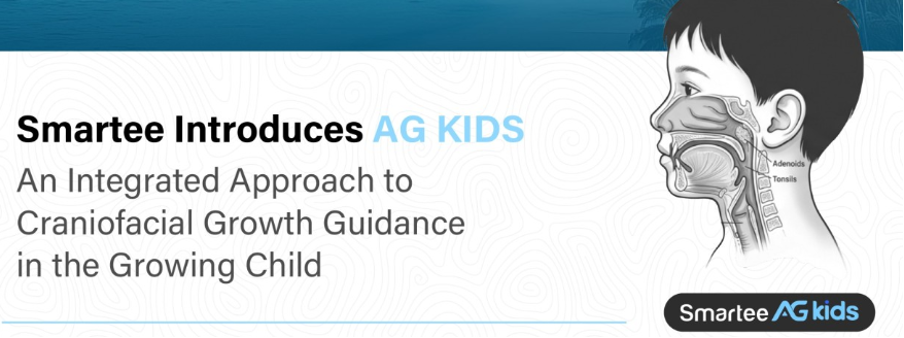
Rather than being presented simply as another pediatric clear-aligner system, it combines several components intended to address different aspects of developing occlusion and orofacial function.
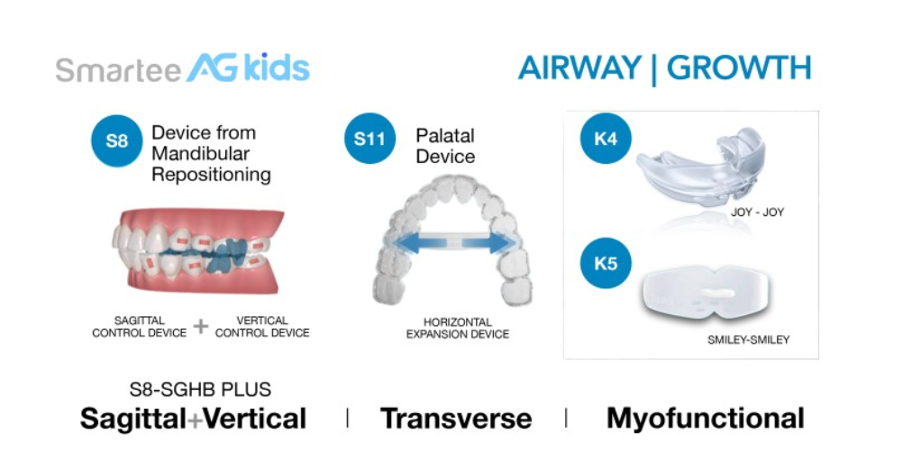
The system includes:
S8-SGHB PLUS
Designed for sagittal and vertical control.
S11 Palatal Device
Used for transverse expansion.
K4 JOY-JOY and K5 SMILEY-SMILEY
Myofunctional components intended to support oral habits, lip function and orofacial muscle coordination.
Treatment planning is also supported through Smartee’s SMARTEECHECK platform and its associated algorithm.
Why Is the Airway Part Getting So Much Attention?
This is perhaps the most interesting part for dentists.
The Malaysian launch wasn’t simply centered around aligners.
The accompanying clinical course focused on airway and craniofacial growth, including early identification of potentially relevant airway-related findings.
The program discussed screening for sleep-related breathing problems and the importance of appropriate referral to ENT specialists or sleep physicians when indicated.
But there is an important distinction.
Screening is not the same as diagnosis.
Smartee’s launch material specifically emphasizes that dentists have an important role in early identification and screening, while formal diagnosis of sleep-related breathing disorders—including obstructive sleep apnea—remains within the appropriate medical scope.
For clinicians, this distinction is critical.
Could This Change How Dentists Assess Growing Patients?
Potentially—but not because every child needs an orthodontic appliance.
The bigger takeaway may be the clinical mindset.
A child presenting with developing malocclusion could prompt a broader assessment of:
- Craniofacial growth pattern
- Skeletal relationships
- Dental arch development
- Oral habits
- Tongue and lip function
- Breathing patterns
- Sleep-related symptoms
- Need for interdisciplinary referral
A Malaysian dental professional who attended the launch described the value of looking beyond tooth alignment toward craniofacial growth, airway, oral function and the developing child as a whole. (LinkedIn)
Where Does Myofunctional Therapy Fit In?
Another interesting feature is the integration of myofunctional support.
The concept is not entirely new. Pediatric orthodontics has long recognized the importance of oral habits and functional factors in developing malocclusion.
Smartee’s earlier pediatric system materials also describe myofunctional trainers and appliances aimed at addressing issues such as poor oral habits and tongue-related problems.
AG KIDS takes this concept and incorporates myofunctional components into a broader growth-guidance system.
Are we simply moving children’s teeth—or are we understanding the growing face behind the malocclusion?
The launch of Smartee AG KIDS in Malaysia is another sign that the conversation around pediatric orthodontics is becoming increasingly centered on growth guidance, function and interdisciplinary care.
For clinicians, the technology is interesting.
But the real story may be the clinical philosophy behind it.
Reference
Smartee Denti-Technology Launches AG KIDS in Malaysia