Imagine being told you have a precancerous lesion in your mouth…
and the only option is surgery—possibly affecting how you speak, eat, or swallow.
Now imagine avoiding that surgery altogether.
That’s exactly what researchers are exploring with a new approach using Nivolumab—and the early results are changing how experts think about oral cancer prevention.
Why This Matters More Than You Think
Precancerous oral lesions affect around 5% of people.
And depending on the severity, they carry up to a 36% risk of becoming cancerous.
The problem?
- No reliable way to predict which lesions will turn into cancer
- Surgery is often repeated due to recurrence
- Patients may lose critical oral function over time
As explained by Moran Amit, repeated surgeries can significantly impact:
- Speech
- Swallowing
- Overall quality of life
The Breakthrough Approach
Instead of removing tissue, researchers tested something different:
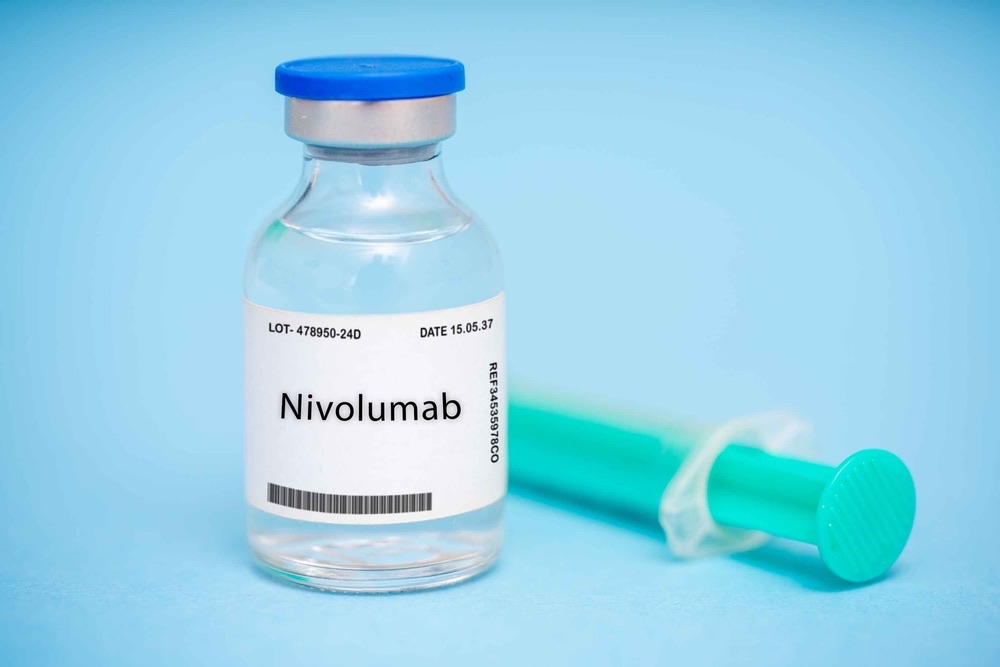
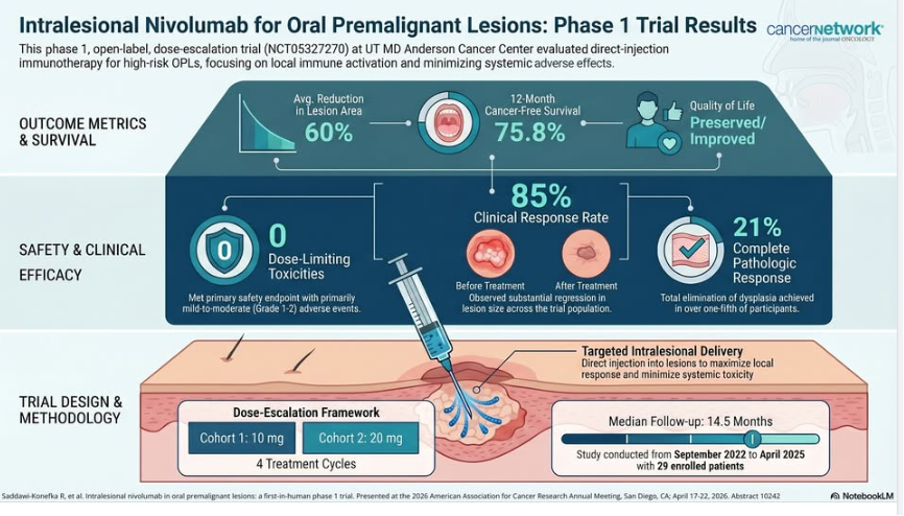
Injecting nivolumab directly into the lesion
Unlike traditional systemic therapy (IV), this method uses only 2–4% of the usual dose, targeting the lesion locally while reducing side effects.
What the Study Found (Phase I Trial)
In a clinical study presented at the AACR Annual Meeting 2026:
- 29 patients with high-risk precancerous lesions were treated
- Injections were given every 3 weeks (4 cycles total)
The results were striking:
- 85% of patients showed reduction in lesion size
- Average lesion shrinkage: ~60%
- 41% showed improvement at the cellular level (less dysplasia)
- Some lesions completely resolved (no signs of abnormal cells)
Even more importantly:
👉 Over 80% of treated lesions remained cancer-free after 1 year
What About Side Effects?
This is where things get even more interesting.
Because the drug was injected locally:
- Systemic drug levels were 10x lower than IV therapy
- Most side effects were mild (fatigue, rash, diarrhea)
- No major safety concerns in most patients
Patients also reported:
- Improved comfort
- Better ability to eat and speak
- Overall improved quality of life
Why This Could Change Dentistry & Oncology
This approach represents a major shift:
From removing tissue → to preserving it
Instead of repeated surgeries, we may soon be able to:
- Treat lesions early
- Activate the immune system locally
- Reduce long-term damage
It also opens doors for similar treatments in:
- Skin precancers
- Cervical lesions
- Other early-stage conditions
Important Reality Check
While the results are promising:
- This was an early-phase (Phase I) study
- Larger trials are needed
- Not yet standard clinical practice
But the direction is clear:
Intervening before cancer develops is becoming a real possibility
The Big Takeaway
This research isn’t just about one drug.
It’s about a new mindset in healthcare:
Don’t wait for cancer. Intercept it early—without destroying healthy tissue.
And that could redefine the future of oral medicine.
Reference
American Association for Cancer Research (AACR), 2026
Intralesional Nivolumab May Be Effective Against Precancerous Oral Lesions