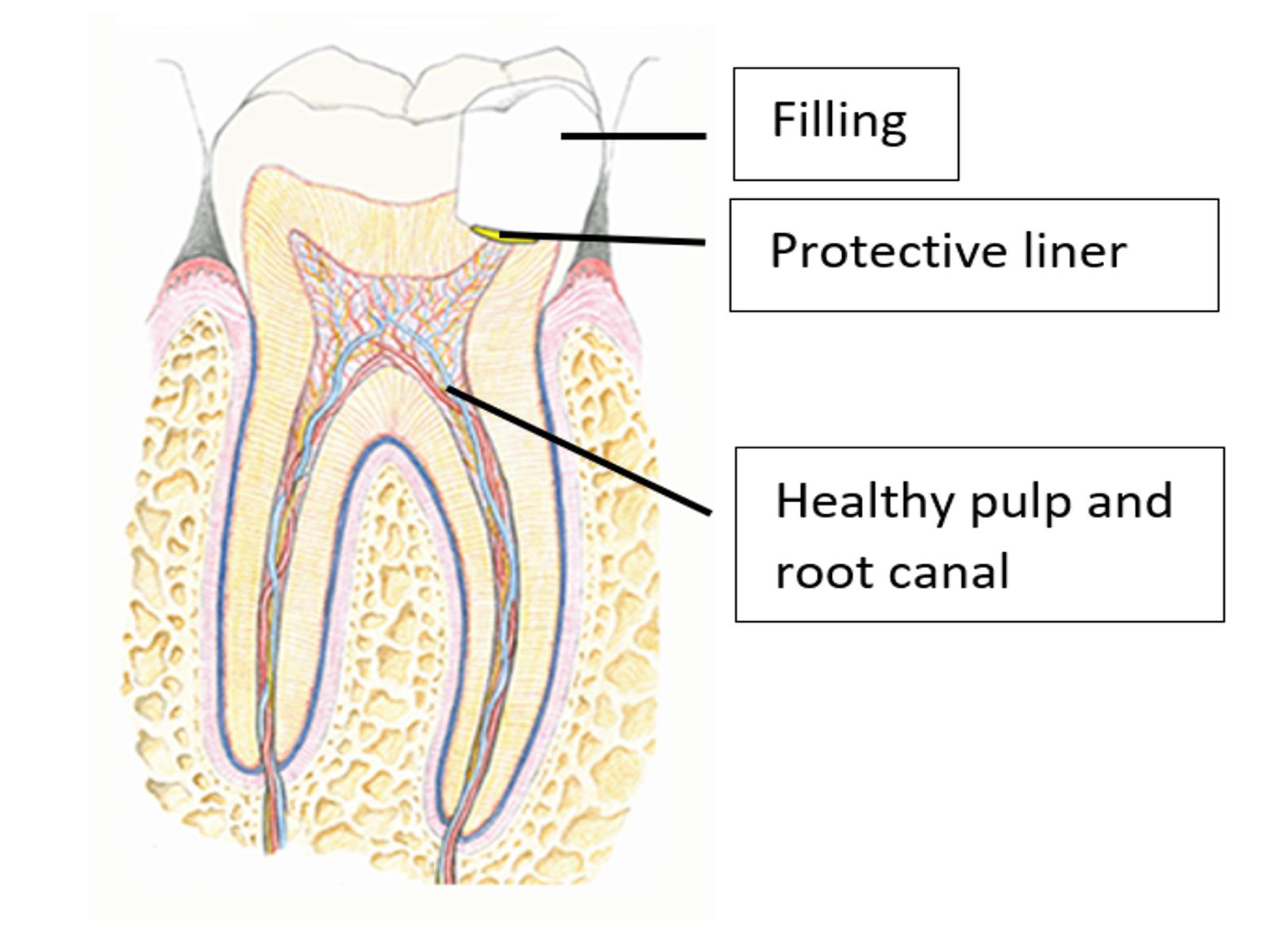
For years, dentists have placed protective liners under deep restorations believing they improve pulp protection and long-term success. But does the type of liner material actually make a difference?
Recent scientific evidence suggests the answer may surprise you.
What Did Recent Research Investigate?
In 2025, a systematic review and meta-analysis published in Biomaterial Investigations in Dentistry by Vaishnavi R. Patankar and colleagues carefully examined this question.
The research team analyzed multiple randomized clinical trials involving selective caries removal , a conservative technique aimed at preserving pulp vitality.
Their goal was simple:
To determine whether different protective liners significantly influence clinical success in deep caries management.
Which Liner Materials Were Compared?
The study evaluated clinical trials involving:
• Calcium hydroxide
• Resin-modified glass ionomer cement (RMGIC)
• Biodentine
• Theracal
• Mineral trioxide aggregate (MTA)
Each material was assessed for outcomes such as:
- Pulp vitality
- Restoration survival
- Overall treatment success
What Were the Results?
Here’s what the evidence showed:
- No statistically significant difference between liner materials
- Calcium hydroxide performed similarly to newer bioactive materials
- Biodentine and Theracal showed comparable outcomes
- Success rates were consistent across materials
- Evidence quality ranged from very low to moderate
The type of liner material did not significantly change clinical outcomes.
The success of deep caries treatment depends more on:
- Proper caries removal
- Accurate pulp diagnosis
- Good isolation
- Strong marginal seal
- Correct restorative technique
not simply the liner material chosen.
Practical Takeaway for Dentists
While protective liners may still be useful in deep lesions near the pulp, their material type alone does not determine success.
Dentists can base their choice on:
• Handling properties
• Ease of use
• Cost and availability
• Specific case requirements
Modern evidence suggests that technique matters more than liner type.
Clinical precision, sealing ability, and case selection remain the true determinants of long-term restorative success.
REFERANCE
A systematic review and meta-analysis evaluating the success of different protective liners after selective caries removal (Patankar V et al.) — Biomaterial Investigations in Dentistry
https://pmc.ncbi.nlm.nih.gov/articles/PMC12766330/