A Remarkable Dental Case That Challenges Traditional Tooth Replacement
A 66-year-old woman arrived at a dental clinic complaining of severe pain and discomfort while chewing on her lower left molar tooth. Clinical examination revealed a deeply cracked mandibular second molar with pulp necrosis and infection around the root apex. Advanced imaging later confirmed that the fracture extended deep into the root, making the tooth completely non-restorable.
For many patients, this situation would normally lead to extraction followed by a dental implant or bridge. But in this extraordinary case, the dental team chose a far more biological and innovative solution — using the patient’s own healthy wisdom tooth to replace the damaged molar.
And one year later, the transplanted tooth remained functional, stable, pain-free, and fully integrated.
The Hidden Problem Behind the Pain
Initially, the patient experienced:
- Severe pain during chewing
- Sensitivity and discomfort
- Difficulty biting on the affected tooth
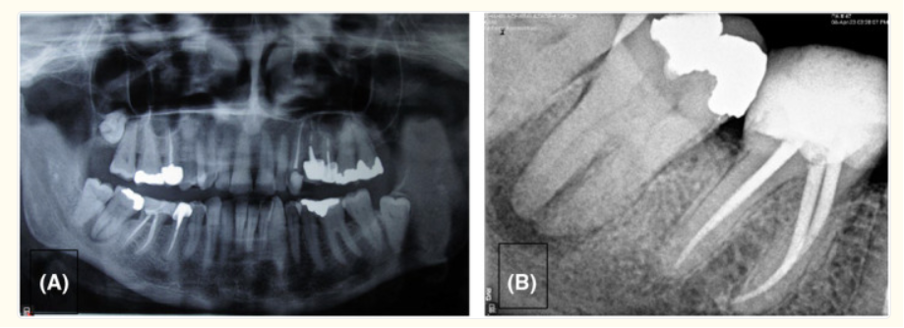
After removing the old amalgam restoration and examining the tooth under magnification, dentists discovered a major crack extending across the pulp chamber floor toward the root.
Cone-beam CT imaging further revealed:
- Extensive root fracture
- J-shaped radiolucent lesion
- Non-restorable prognosis
The damaged second molar had no long-term chance of survival.
The Tooth That Became the Replacement
During examination, clinicians noticed that the adjacent mandibular third molar (wisdom tooth) was:
Healthy
Fully developed
Properly positioned
Not actively involved in chewing function
This made it a suitable donor tooth for auto-transplantation, a procedure where a tooth is moved from one location to another within the same patient.
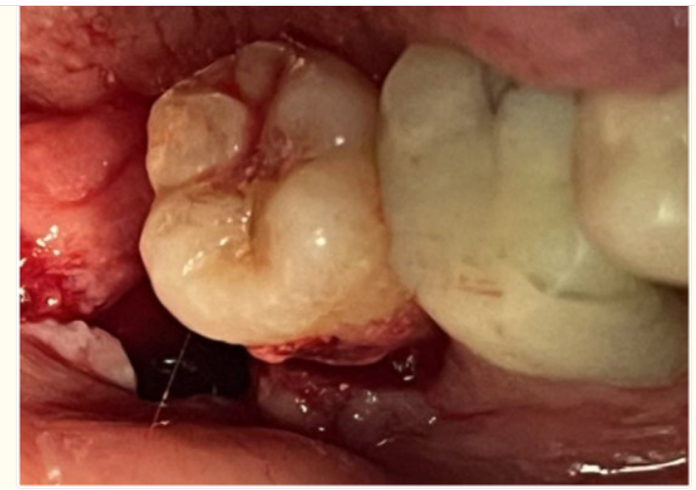
Instead of placing an artificial implant, the team decided to transplant the wisdom tooth directly into the extraction socket of the damaged molar.
How the Procedure Was Done
The treatment began with:
- Chlorhexidine mouth rinse for disinfection
- Local anesthesia administration
- Atraumatic extraction of the wisdom tooth
- Immediate extraction of the fractured molar
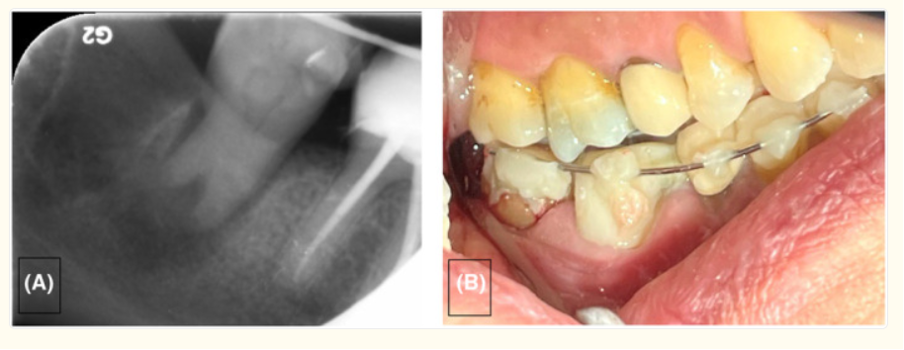
To improve adaptation inside the socket, the donor tooth was rotated by 90 degrees before placement.
The transplanted tooth was then:
- Stabilized with semi-rigid orthodontic wire
- Sutured to reduce movement
- Adjusted to remove occlusal interference
Most impressively, the entire transplantation procedure was completed within just 5 minutes, helping preserve the vitality of the periodontal ligament cells.
Recovery and Follow-Up
Two weeks later:
- Splinting was removed
- Tooth mobility was minimal
- Root canal treatment was initiated due to lack of pulp vitality
The canals were disinfected, medicated, and later sealed using bioceramic root canal materials.
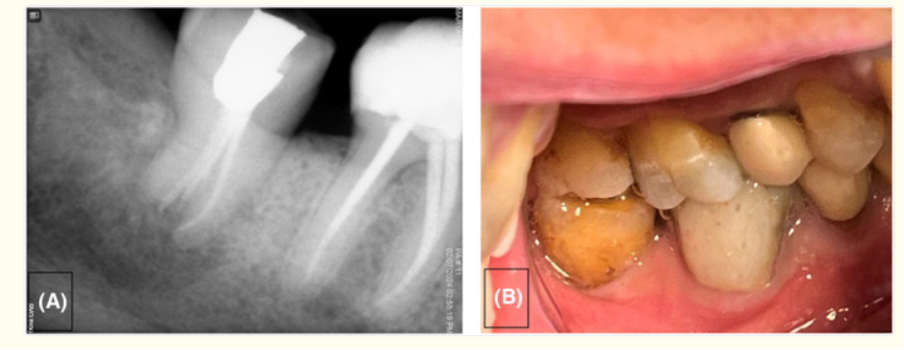
At the 1-year follow-up:
No pain or discomfort
Normal chewing function
Stable occlusion
Healthy periodontal tissues
Bone regeneration around roots
No root resorption
The patient remained completely symptom-free and satisfied with the outcome.
Modern dentistry often relies heavily on implants for tooth replacement. However, this case demonstrates that natural tooth transplantation can still be a highly effective treatment option in carefully selected patients.
Potential advantages include:
- Preservation of natural periodontal ligament
- Better proprioception
- Bone stimulation and regeneration
- Cost-effectiveness
- Biological tooth replacement
Reference
Successful Auto-Transplantation of a Mandibular Third Molar: A Case Report on Restoring Esthetics and Function in a 66-Year-Old Patient