Snoring is often dismissed as a harmless nighttime nuisance, but for millions of people, it affects much more than sleep. It can lead to daytime fatigue, poor concentration, strained relationships, and, in some cases, signal underlying breathing disorders such as obstructive sleep apnea. While traditional treatment options include lifestyle changes, oral appliances, CPAP machines, or surgery, a new laser-based approach is gaining attention for offering a comfortable, non-invasive alternative.
One of the latest innovations is NightLase®, a laser treatment developed by Fotona, designed to reduce snoring without surgery, needles, anesthesia, or lengthy recovery periods. The treatment has become increasingly popular among dentists and sleep medicine professionals looking for minimally invasive ways to improve airway function and sleep quality.
What is NightLase®?
NightLase® is a laser therapy that targets the soft tissues at the back of the mouth and throat—the areas most commonly responsible for snoring.
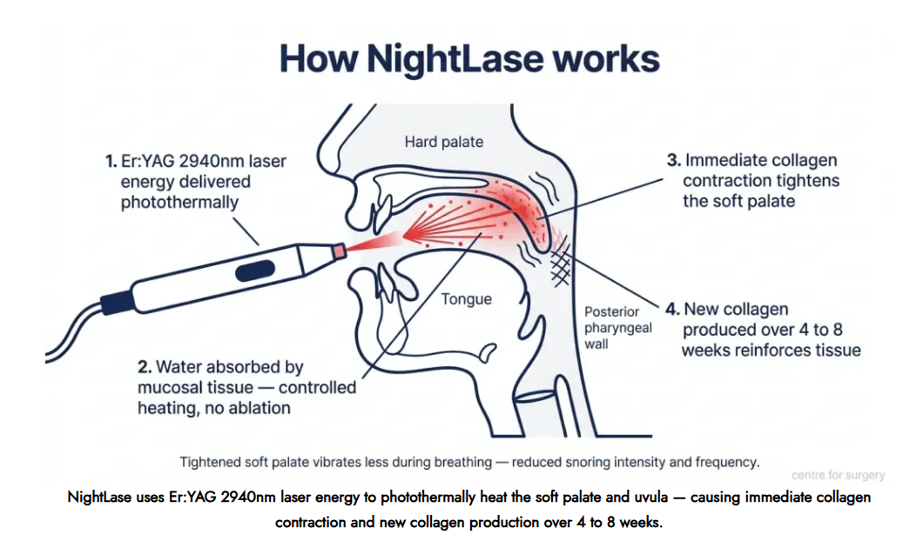
When we sleep, the muscles of the soft palate and surrounding tissues relax. In many individuals, these tissues become loose enough to vibrate as air passes through the airway, producing the familiar snoring sound. NightLase® addresses this problem by gently tightening these tissues using controlled laser energy.
Unlike surgical procedures that remove tissue, NightLase® works by stimulating the body’s natural collagen production. As collagen remodels over the following weeks, the tissues become firmer and more stable, reducing vibration during breathing.
How does the treatment work?
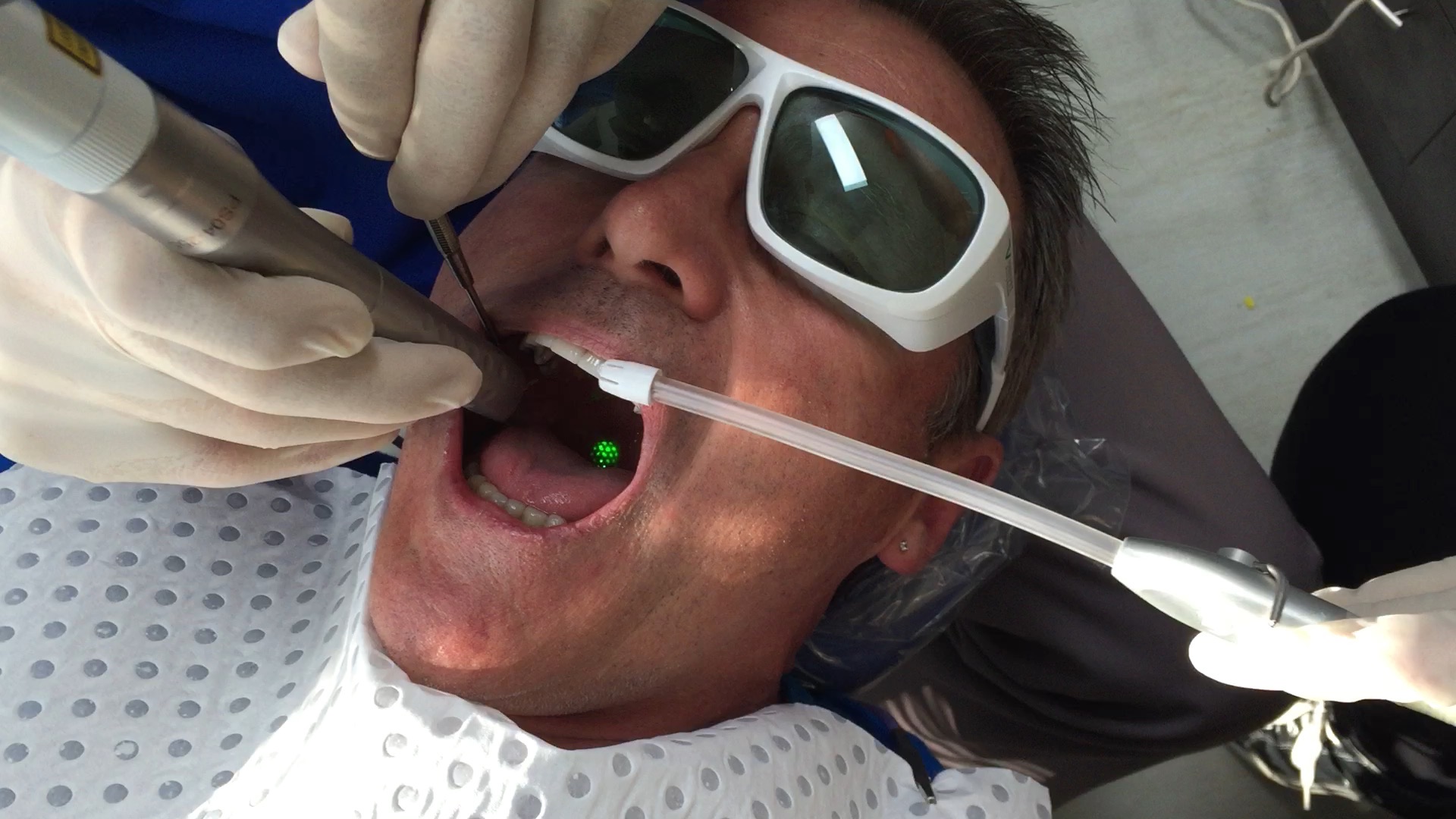
NightLase® uses an Er:YAG laser operating in Fotona SMOOTH® mode, which delivers carefully controlled heat to the soft palate, uvula, and surrounding throat tissues without cutting or damaging the surface.
The controlled heating triggers a biological response that:
- Stimulates new collagen production.
- Tightens lax soft tissues.
- Reduces tissue vibration.
- Helps maintain a more open airway during sleep.
- Improves airflow with minimal discomfort.
Because the treatment is non-ablative, patients typically experience little to no pain and can immediately return to normal daily activities.
What happens during the procedure?
One of NightLase®’s biggest advantages is its simplicity.
A typical treatment plan includes:
- Three treatment sessions.
- Sessions spaced approximately one month apart.
- Around 30 minutes per visit.
- No injections.
- No anesthesia.
- No incisions or stitches.
- No recovery time.
Some patients notice improvement after the very first session, while others experience gradual improvement as collagen remodeling continues over several weeks.
Why is NightLase® attracting attention?
Traditional snoring treatments are not suitable for everyone.
Many patients struggle with CPAP compliance because of discomfort or inconvenience. Others may hesitate to undergo surgery because of recovery time, cost, or potential complications.
NightLase® offers several potential advantages:
- Completely non-surgical.
- Comfortable outpatient procedure.
- Minimal disruption to daily life.
- No medications required.
- No downtime.
- Repeatable if symptoms return.
- Suitable for many patients with primary snoring.
These features have made it an increasingly attractive option in both dental and sleep medicine practices.
Clinical benefits reported
According to Fotona and published clinical studies, many patients report noticeable improvements following treatment.
Reported benefits include:
- Significant reduction in snoring intensity.
- Better breathing during sleep.
- Improved overall sleep quality.
- Reduced nighttime airway vibration.
- Increased daytime alertness.
- Better concentration.
- Improved quality of life.
- More restful sleep for bed partners.
Many patients also report waking up feeling more refreshed after treatment.
How long do the results last?
Clinical experience suggests that improvements commonly last up to one year or even longer, although individual results vary depending on anatomy, age, body weight, and lifestyle factors.
Because the treatment stimulates natural tissue remodeling rather than permanently altering anatomy, maintenance sessions may be recommended if snoring gradually returns.
Can it help sleep apnea?
NightLase® is primarily designed to treat snoring caused by vibration of soft tissues.
For patients with obstructive sleep apnea (OSA), the treatment may serve as an additional supportive therapy but is not intended to replace established medical treatments such as CPAP, oral appliance therapy, or surgery when these are clinically indicated.
Anyone suspected of having sleep apnea should first undergo proper medical evaluation and diagnosis before considering treatment options.
Is the treatment safe?
One reason NightLase® has gained popularity is its strong safety profile.
Because the procedure uses carefully controlled laser energy without cutting tissue, patients generally experience minimal discomfort and can return to work or normal activities immediately after treatment.
No anesthesia or pain medication is typically required, making the procedure particularly attractive for patients seeking less invasive solutions.
Why dentists are becoming involved
Dentists are uniquely positioned to identify patients suffering from snoring because they routinely examine the oral cavity, palate, tongue, and airway during dental visits.
As awareness grows regarding the connection between oral health, airway health, and sleep quality, more dental professionals are incorporating airway assessments into routine examinations and offering therapies such as NightLase® as part of comprehensive patient care.
The Future of Snoring Management
Modern dentistry is rapidly expanding beyond teeth and gums into airway health and sleep medicine. Technologies like NightLase® demonstrate how minimally invasive laser therapy may provide patients with new treatment options that are both comfortable and effective.
Although not every patient is an ideal candidate, the combination of short treatment sessions, no surgery, no downtime, and encouraging clinical outcomes has made NightLase® one of the most talked-about innovations in laser-assisted sleep therapy.
As research continues and awareness increases, laser-based airway treatments may play an increasingly important role in improving sleep quality and overall well-being for millions of people affected by chronic snoring.
Reference
Article: NightLase® – Laser Treatment for Snoring
Source: Fotona