What if a one-minute dental treatment could stop a cavity in a child—without a drill, injection or filling
It may sound futuristic, but silver diamine fluoride (SDF) is already changing the conversation around pediatric caries.
A new randomized clinical trial published has added some of the strongest evidence yet that 38% SDF can safely and effectively arrest cavitated dentine carious lesions in young children with severe early childhood caries (ECC).
And the most surprising part?
Some of the children were just 1 year old.
The Problem: Cavities Can Start Very Early
Severe early childhood caries can progress rapidly, causing pain, infection, difficulty eating and significant disruption to a child’s quality of life.
But treating very young children isn’t always straightforward.
A toddler may struggle to sit still for conventional restorative treatment. Fear, limited access to dental care, medical conditions, developmental disabilities and dental anxiety can all make conventional treatment challenging.
This is where minimally invasive dentistry becomes particularly valuable.
Enter Silver Diamine Fluoride
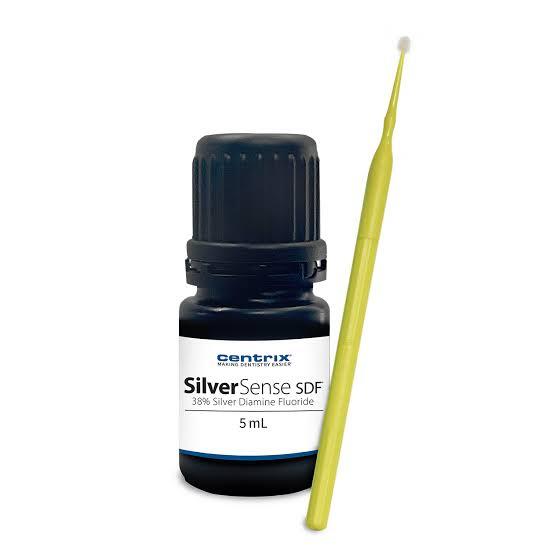
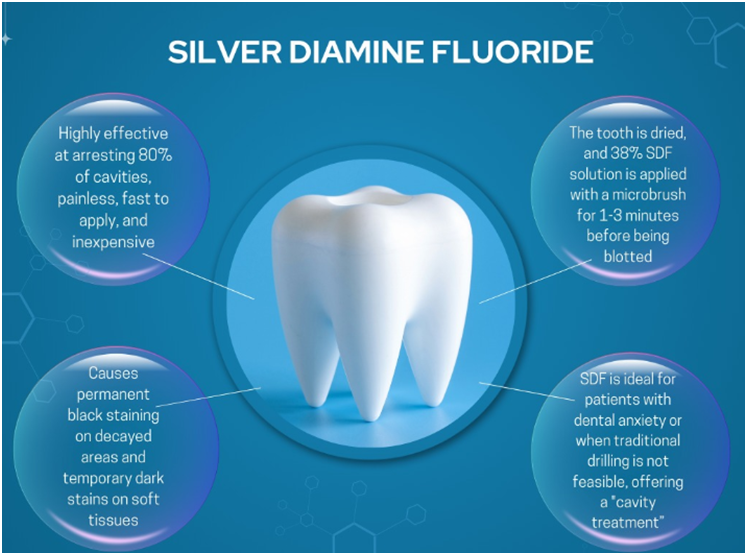
SDF is a topical liquid containing silver and fluoride that can be applied directly to carious lesions.
Instead of removing the decay with a drill, the goal is to arrest the progression of the lesion.
The concept is simple:
Identify the lesion → apply SDF → arrest the caries → monitor the tooth.
It doesn’t necessarily restore the tooth’s original shape or appearance, but it can provide something extremely valuable:
Time.
Time to control the disease.
Time to establish a dental home.
Time for the child to mature.
And time to plan definitive treatment when appropriate.
What Did the New Study Find?
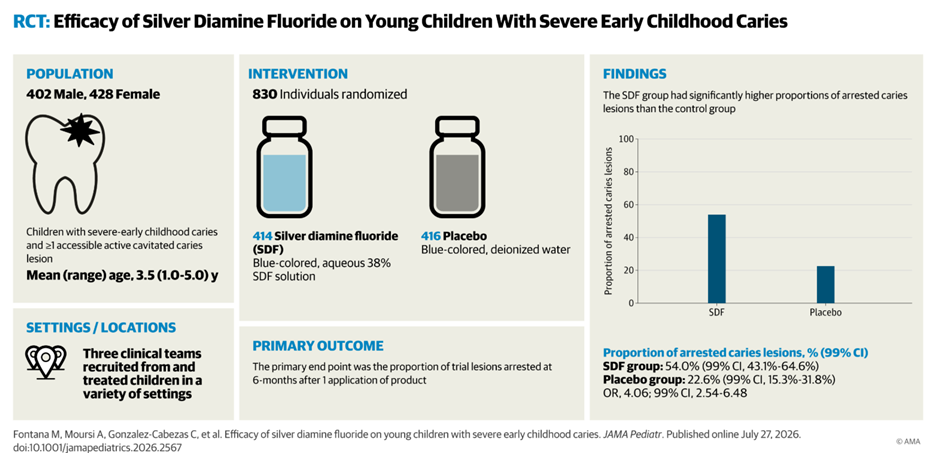
Researchers enrolled 830 children younger than 6 years with severe early childhood caries.
The children were randomly assigned to receive either:
- 38% SDF
- Placebo
The treatment was provided at baseline and again six months later.
The results were striking.
At 3, 6 and 8 months, lesion arrest rates in the SDF group ranged from approximately 50% to 58%, compared with only 17% to 23% in the placebo group.
Importantly, researchers found no difference in dental pain between the groups, and treatment-related adverse events occurred at similar frequencies.
That’s significant evidence for a treatment designed specifically to stop active caries progression.
Could SDF Be Especially Useful for Toddlers?
Imagine a 1-year-old with multiple cavitated lesions.
Traditional restorative treatment may require:
local anesthesia → isolation → caries removal → restoration → cooperation
For some children, achieving all of this can be extremely difficult.
SDF offers another option:
arrest the disease first.
This doesn’t mean every cavity should simply be painted with SDF and forgotten.
Rather, SDF can become part of a broader caries management strategy, alongside dietary counseling, fluoride exposure, plaque control, monitoring and definitive restorative care when necessary.
The Catch: SDF Has a Cosmetic Downside
There is one feature of SDF that clinicians and parents cannot ignore.
It turns arrested carious dentine dark.
For many parents, this discoloration can be concerning, particularly when visible front teeth are involved.
But here’s the important distinction:
SDF is designed primarily to arrest disease—not to make a decayed tooth look untouched.
For posterior teeth or situations where controlling disease is the immediate priority, the trade-off may be acceptable.
For highly visible anterior teeth, treatment decisions may be different.
Why This Could Be a Big Deal
The significance of this study goes beyond one material.
It reflects a broader shift in dentistry:
From “remove and restore”
→ toward “detect, arrest and preserve.”
Minimally invasive dentistry is increasingly focused on controlling the disease process while preserving as much healthy tooth structure as possible.
SDF fits naturally into this philosophy.
And for children who cannot easily tolerate conventional dental treatment, it could provide a practical bridge between disease detection and definitive care.
Could SDF Move Beyond Off-Label Use?
In the United States, SDF was cleared as a medical device for dentine hypersensitivity in adults in 2014, while its use for caries arrest has remained off-label.
The new clinical evidence could strengthen the case for broader regulatory approval and more standardized use in young children.
If that happens, SDF could potentially see wider adoption across:
Pediatric dental clinics • Community programs • School-based care • Primary care settings
But implementation would still depend on appropriate training and clinical protocols.
What Should Dentists Take Away?
The message isn’t that SDF replaces fillings.
It’s that dentistry now has another tool for situations where conventional restorative treatment isn’t immediately practical.
The future of pediatric dentistry may not always begin with a drill.
Sometimes, it may begin with a tiny brush and a drop of silver diamine fluoride.
Reference
Efficacy of Silver Diamine Fluoride on Young Children With Severe Early Childhood CariesA Randomized Clinical Trial