A routine dietary choice could be influencing the microenvironment beneath clear aligners. New research offers dentists another reason to discuss soft-drink consumption during orthodontic treatment.
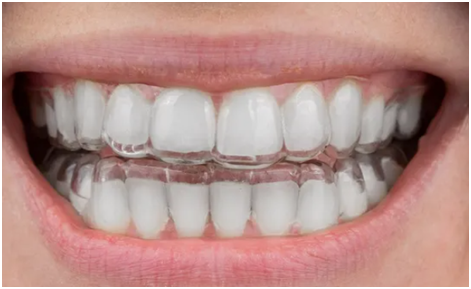
Clear aligner therapy has become an increasingly popular approach to orthodontic treatment because of its aesthetics, removability and convenience. However, the close adaptation of an aligner to the tooth surface creates a distinct tooth–saliva–plaque microenvironment that may be influenced by dietary habits.
A recent study published investigated how exposure to cola affects pH and the bacterial communities associated with the inner surface of clear aligners over a 24-hour period.
The findings raise an important clinical question:
Does removing an aligner before consuming an acidic beverage completely eliminate its potential effects on the oral environment?
The answer may be more complicated than expected.
The Study: What Did Researchers Investigate?
The study included 24 healthy female graduate students, with a mean age of 23.1 years. Participants were provided with custom-made passive clear aligners and divided into three experimental conditions.
- The control group followed a normal diet without cola exposure.
- The second group removed their aligners, rinsed with cola for one minute, and then replaced the aligners.
- The third group rinsed with cola for one minute while wearing their aligners.
Researchers collected plaque and fluid samples from the inner dental surfaces at five time points:
3 minutes, 4 hours, 8 hours, 12 hours and 24 hours.
Using 16S rRNA gene sequencing, the researchers assessed changes in the microbial communities associated with the aligner environment.
An Immediate Reduction in pH
One of the clearest findings was an immediate decrease in pH following cola exposure.
The pH subsequently showed some recovery between 4 and 8 hours. However, at approximately 12 hours, a second and more pronounced reduction was observed.
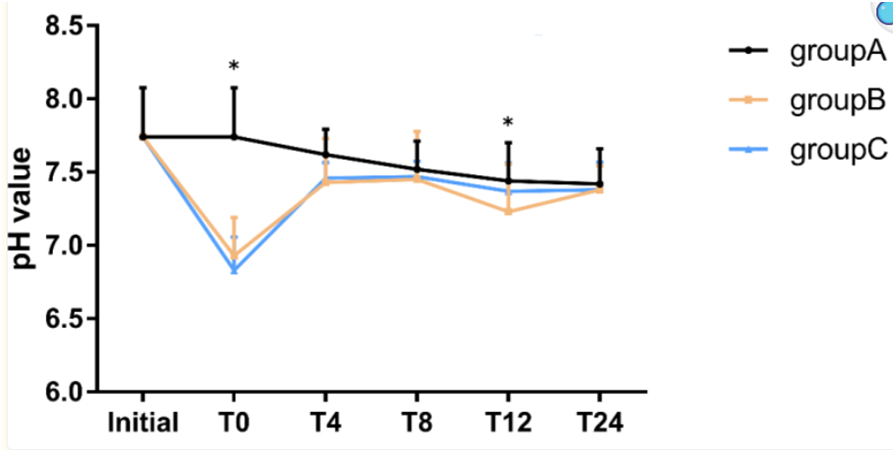
Interestingly, the group that removed the aligners before cola exposure demonstrated a significantly greater pH reduction at 12 hours compared with participants who remained in their aligners during exposure.
This finding is intriguing from a clinical perspective, but it requires careful interpretation.
The researchers proposed that removing the aligner may allow cola residues to remain on the tooth surfaces. When the aligner is subsequently replaced, these residues could potentially become enclosed within the aligner–tooth interface.
This may create conditions that allow continued microbial metabolism and acid production.
However, the authors describe this proposed mechanism as hypothetical, and further research is required to establish whether it occurs consistently in clinical practice.
The Oral Microbiome Also Changed
The study went beyond measuring pH and examined changes in the microbial communities associated with the aligner surfaces.
The cola-exposed groups demonstrated reduced microbial richness and evenness compared with the control group during the observation period, with significant differences noted at approximately 12 hours.
The group that removed the aligners before cola exposure demonstrated the most pronounced microbial disturbance at this time point.
The researchers also identified changes in the relative abundance of several bacterial groups, including Fusobacteria, Actinobacteria and Bacteroidetes.
These findings suggest that cola exposure can temporarily alter the microbial composition associated with the clear-aligner environment.
Importantly, however, a change in microbial abundance should not automatically be interpreted as evidence of disease or clinical harm. The study demonstrates microbial shifts, rather than establishing that these changes directly cause caries, enamel demineralisation or periodontal disease.
Why Is This Clinically Relevant?
For dentists and orthodontists, the study provides an opportunity to revisit dietary counselling for clear aligner patients.
Patients are commonly instructed to remove their aligners before consuming anything other than water. This remains a practical approach to minimise exposure of the aligner and teeth to potentially problematic beverages.
However, the study highlights an additional consideration:
Removing the aligner is only one part of the equation.
If a patient consumes cola and subsequently replaces the aligner without adequately cleaning or rinsing the oral cavity, residual beverage components may remain in contact with the teeth beneath the tray.
Therefore, patient education should address not only when to remove the aligner, but also what to do before replacing it.
What Should Dentists Tell Patients?
Rather than giving patients a simple instruction to “remove your aligners before drinking cola,” clinicians can provide more comprehensive preventive guidance.
Patients should be encouraged to:
- Limit the frequency of acidic and sugar-containing beverages.
- Remove clear aligners before consuming beverages other than water.
- Maintain meticulous oral hygiene throughout orthodontic treatment.
- Rinse the mouth with water after consuming acidic or sugary drinks.
- Clean the teeth appropriately before replacing the aligners whenever possible.
- Clean the aligners according to the manufacturer’s recommendations.
The objective is not simply to protect the aligner.
It is to protect the tooth surface and surrounding oral environment throughout treatment.
A New Perspective on Clear Aligner Therapy
Clear aligners are usually discussed primarily in terms of biomechanics and tooth movement.
However, their continuous contact with the dentition means they also influence the local oral environment.
This creates an interaction between:
Diet → pH → saliva → plaque → microbiome → tooth surface → aligner.
Understanding this relationship may become increasingly important as clear aligner therapy expands.
From a preventive dentistry perspective, this also reinforces the importance of assessing a patient’s caries risk, dietary habits, plaque control and compliance before and during orthodontic treatment.
Reference
The Changes of Microbiome Attached on Clear Aligners after Drinking Coca-Cola