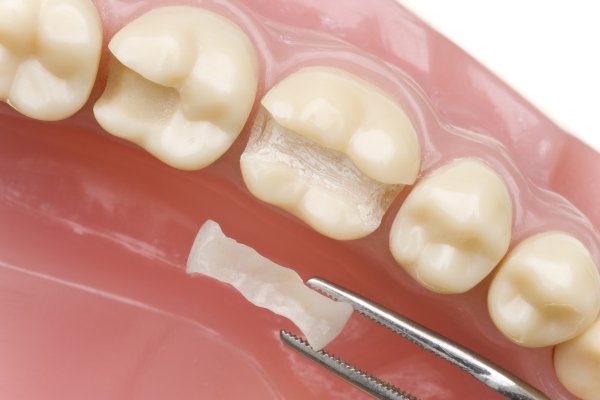
Researchers have developed the world’s first patented long-acting antibacterial adhesive resin, a technology designed to prevent one of dentistry’s biggest problems: secondary (recurrent) caries.
If commercialized successfully, this innovation could dramatically increase the lifespan of fillings, crowns, and other restorations while saving billions in dental treatment costs worldwide.
The Breakthrough: An Adhesive That Actively Kills Bacteria
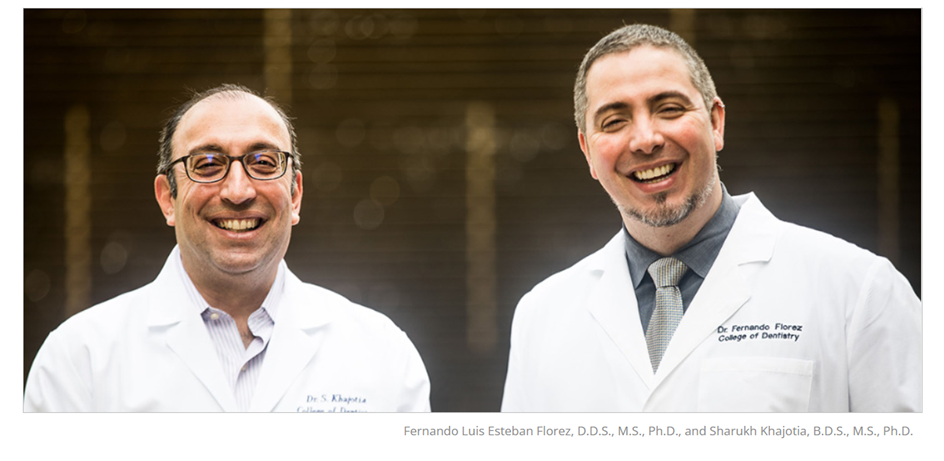
Dr. Fernando Luis Esteban Florez, a dentist and researcher at the University of Oklahoma College of Dentistry, envisioned a material that could do more than simply bond a restoration to tooth structure.
His goal:
Create a dental adhesive capable of providing long-term antibacterial protection.
To achieve this, his team collaborated with scientists at the U.S. Department of Energy’s Oak Ridge National Laboratory (ORNL), using advanced nanotechnology and neutron-scattering facilities.
The result is a patented multifunctional antibacterial polymer technology.
How Does It Work?
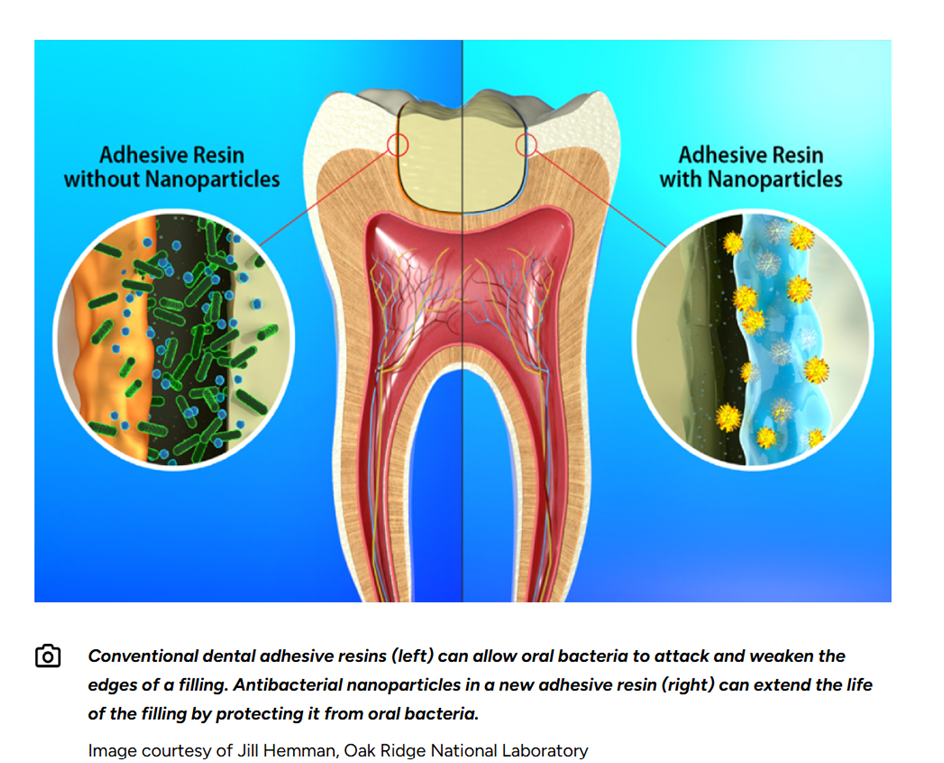
The researchers engineered modified titanium dioxide nanoparticles and incorporated them into conventional dental adhesive resin.
Unlike traditional antibacterial materials that lose effectiveness over time, these nanoparticles:
- Continuously generate reactive oxygen species (ROS).
- Destroy bacteria, viruses, and other microorganisms.
- Function without requiring light activation.
- Maintain strong antimicrobial activity after incorporation into the adhesive.
An additional advantage is that microorganisms are far less likely to develop resistance against ROS compared with conventional antibiotics.
Why This Technology Is Different
One of the biggest challenges in nanotechnology is particle aggregation.
When nanoparticles clump together, they lose much of their effectiveness and can weaken material properties.
Using cutting-edge imaging technologies—including:
- Helium-ion microscopy
- Small-angle neutron scattering (Bio-SANS)
the researchers optimized:
- Particle size
- Surface modification
- Uniform dispersion throughout the adhesive resin
According to the research team, this is the first time dental nanoparticles have been successfully dispersed without clustering while maintaining potent antibacterial activity inside a dental polymer.
Benefits for Dentists and Patients
If this technology reaches clinical practice, it could provide several important advantages:
Reduced Secondary Caries
Continuous antibacterial activity may significantly decrease recurrent decay around restorations.
Longer-lasting Restorations
Fillings and crowns may remain functional for substantially longer than current materials.
More Conservative Dentistry
Fewer replacement restorations mean greater preservation of natural tooth structure.
Lower Treatment Costs
Researchers estimate the technology could help prevent over 60 million dental procedures annually in the United States, potentially saving more than $5 billion each year.
Better Patient Experience
Patients could require fewer repeat appointments and undergo less invasive retreatment over their lifetime.
Applications Beyond Dental Fillings
The antibacterial polymer isn’t limited to restorative dentistry.
Researchers suggest it could also be incorporated into:
- Dental bonding agents
- Resin cements
- Teeth whitening products
- Orthodontic materials
- Medical devices
- Hospital equipment
- Frequently touched public surfaces
Its versatility opens opportunities well beyond dentistry.
Commercialization May Be Closer Than You Think
The inventors have reported ongoing discussions with a leading dental products manufacturer to commercialize the patented technology.
If successful, dentists could eventually have access to restorative materials that not only repair damaged teeth but also actively defend them against future bacterial attack.
What This Means for the Future of Restorative Dentistry
Restorative dentistry has traditionally focused on replacing lost tooth structure.
The next generation of materials is shifting toward bioactive restorations—materials that interact with the oral environment rather than remaining passive.
This antibacterial adhesive represents an important step toward:
- Smarter restorative materials
- Longer restoration survival
- Reduced retreatment
- Improved oral health outcomes
- Minimally invasive dentistry
While additional clinical studies are still needed before widespread adoption, this innovation illustrates how nanotechnology may redefine the future of restorative care.
Reference
Basic2Breakthrough: A Dentist’s Journey to Save Your Teeth
OU College of Dentistry Researchers Are Fighting Back Against Bacteria on Dental Restorations