

For decades, scientists have known that smoking is one of the biggest risk factors for cardiovascular disease. But exactly how cigarette smoke damages the heart has remained a mystery.
This discovery could reshape our understanding of smoking-related heart disease and pave the way for new anti-inflammatory therapies.
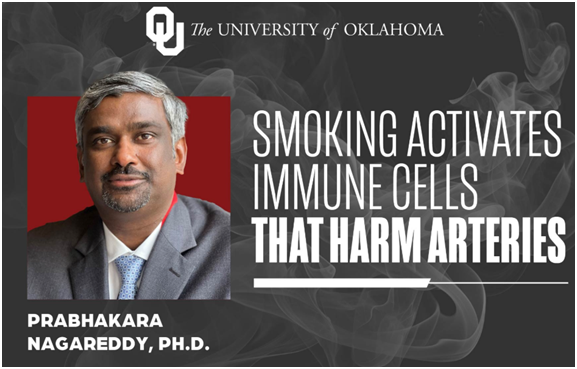
The Missing Link Between Smoking and Heart Disease
While smoking has long been associated with heart attacks and strokes, researchers wanted to understand what happens inside the body after cigarette smoke enters the lungs.
Their investigation focused on neutrophils, the most abundant type of white blood cell and one of the body’s first responders against infection.
Under normal conditions, neutrophils protect the body by attacking invading bacteria and pathogens. However, the study found that cigarette smoke dramatically alters their behavior.
Instead of defending the body, these immune cells begin to fuel harmful inflammation.
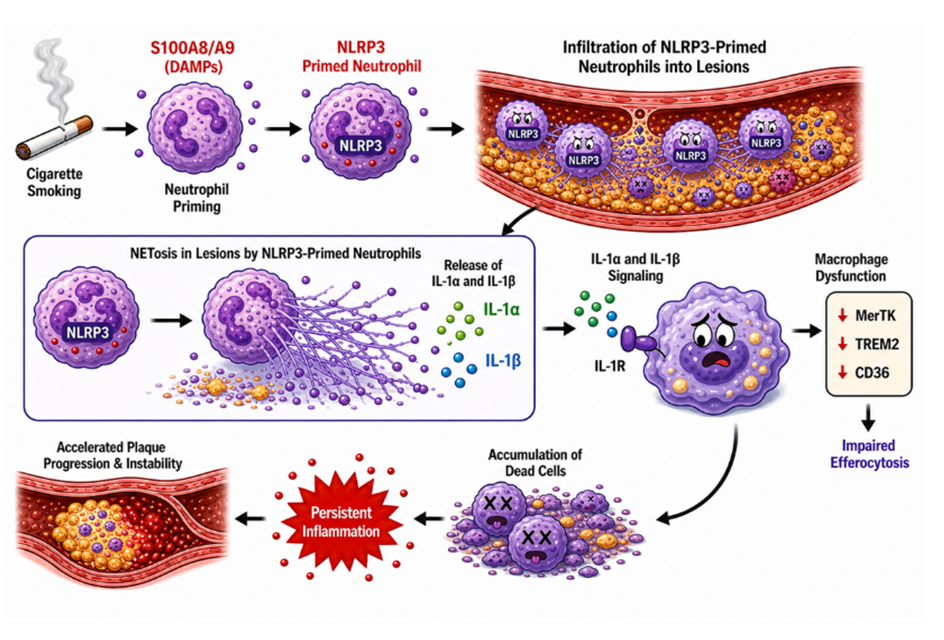
How Cigarette Smoke Triggers a Dangerous Chain Reaction
The researchers identified the following sequence of events:
Step 1: Cigarette Smoke Activates Neutrophils
Chemicals present in cigarette smoke stimulate neutrophils, causing them to rapidly increase in number and become highly activated.
Step 2: Neutrophils Enter Blood Vessels
These activated immune cells migrate from the lungs into the bloodstream, where they encounter another important immune cell known as the macrophage.
Step 3: Immune Cell Dysfunction Begins
Following interaction with macrophages, many neutrophils die and release inflammatory proteins, particularly:
- Interleukin-1 alpha (IL-1α)
- Interleukin-1 beta (IL-1β)
These molecules are powerful drivers of inflammation.
Step 4: Macrophages Stop Doing Their Job
Normally, macrophages remove dead cells and excess cholesterol from artery walls.
However, exposure to these inflammatory proteins causes macrophages to become dysfunctional.
As a result, cholesterol and cellular debris accumulate inside arteries.
Step 5: Plaque Formation Accelerates
Over time, this persistent inflammation promotes the growth and instability of atherosclerotic plaques.
If one of these plaques ruptures, it can form a blood clot that blocks blood flow, leading to a heart attack or stroke.
An Unexpected Discovery
One of the study’s most surprising findings was that the harmful inflammatory response was not limited to smoke inhalation.
Researchers observed that tobacco-related chemicals could activate immune cells even when they entered the body through other routes.
This suggests that once tobacco chemicals are absorbed into the bloodstream, they may directly influence immune function regardless of how they entered the body.
This finding raises important questions about newer nicotine delivery systems, including e-cigarettes, vaping devices, and nicotine pouches.
The research team plans to investigate whether these products trigger the same inflammatory pathway.
Why This Research Matters
Current cardiovascular treatments primarily focus on lowering cholesterol levels.
While cholesterol management remains essential, this study highlights that inflammation is another major driver of cardiovascular disease.
Understanding this newly identified immune pathway could eventually lead to therapies that:
- Reduce harmful inflammation.
- Prevent plaque progression.
- Lower the risk of heart attacks.
- Improve cardiovascular outcomes in smokers and former smokers.
Although quitting smoking remains the most effective way to reduce risk, future treatments may target the inflammatory mechanisms uncovered in this research.
Looking Ahead
The investigators are now working to identify which of the more than 7,000 chemicals found in cigarette smoke are responsible for triggering this harmful immune response.
Future studies will also examine:
- Vaping products
- Nicotine pouches
- Other nicotine delivery systems
- Human clinical studies to confirm the findings
These investigations may provide valuable insights into how different tobacco and nicotine products affect cardiovascular health.
The Dentist’s Role
This research reinforces that dentists play a vital role beyond oral care. Every dental visit is an opportunity to identify tobacco-related oral changes, educate patients about the hidden link between smoking, chronic inflammation, and heart disease, and provide tobacco cessation counseling. By promoting smoking cessation and maintaining periodontal health, dentists can help protect not only the mouth but also the heart.
Reference
Inflammasome-Primed Neutrophils Aggravate Atherosclerosis in Cigarette Smoking