What if the cells you thought were just “supporting actors” were actually controlling your oral immune system?
For decades, fibroblasts were considered simple structural cells responsible for producing connective tissue and helping wounds heal. But a groundbreaking international study has completely rewritten that story.
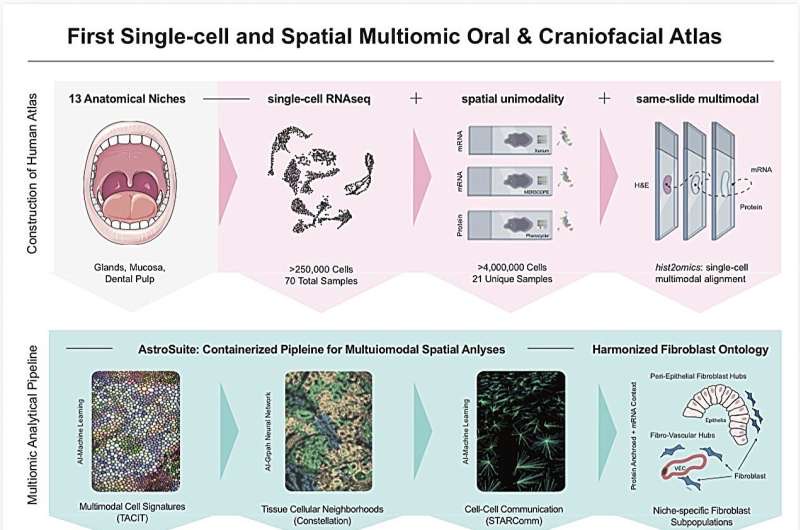
Using artificial intelligence, single-cell sequencing, and advanced spatial multiomics, researchers have created the world’s first comprehensive AI-powered atlas of oral fibroblasts, revealing that these cells are master regulators of immunity, inflammation, tissue repair, and even cancer development inside the mouth.
This isn’t just another laboratory discovery—it could redefine how we diagnose and treat oral diseases in the coming years.
What Did Researchers Discover?
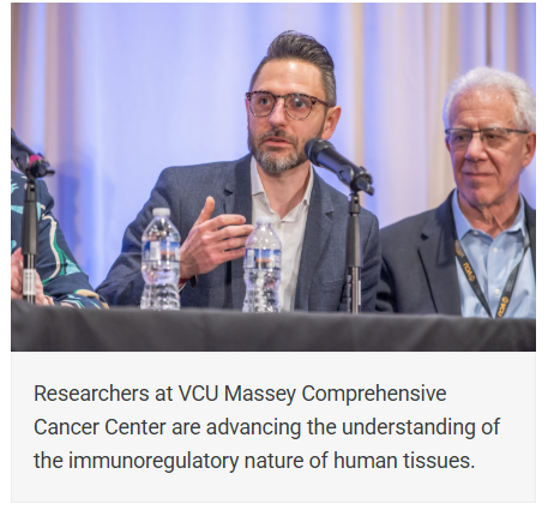
Scientists from Virginia Commonwealth University (VCU) collaborated with leading institutions across the United States and Europe to map thousands of fibroblasts from healthy human oral tissues.
Instead of acting as passive support cells, fibroblasts were found to:
- Coordinate immune responses
- Control inflammatory signals
- Guide tissue repair
- Influence scar formation (fibrosis)
- Interact with cancer cells
- Communicate with neighboring immune cells
In simple terms, fibroblasts function like the control center of the mouth’s structural immune system.
AI Made This Discovery Possible
The research combined several cutting-edge technologies:
- Artificial Intelligence
- Single-cell RNA sequencing
- Spatial proteotranscriptomics
- Computational biology
- A newly developed AI platform called AstroSuite
Rather than studying cells individually, the AI reconstructed how every cell communicates within living oral tissue.
This produced an interactive biological atlas that researchers can use to better understand disease progression at an unprecedented level.
Why Should Dentists Care?
This discovery has enormous clinical relevance.
1. Better Understanding of Periodontal Disease
Chronic inflammation may not depend only on bacteria.
Fibroblasts appear to regulate how aggressively tissues respond to infection, potentially explaining why patients with similar plaque levels experience very different disease outcomes.
2. Improved Oral Cancer Research
Cancer cells don’t work alone.
Fibroblasts help create the tumor microenvironment that allows cancers to grow, invade surrounding tissues, and resist treatment.
Targeting these cells could become a future therapeutic strategy.
3. New Hope for Fibrosis
Excessive scar formation affects many oral conditions, including:
- Oral submucous fibrosis
- Surgical wound healing
- Implant soft tissue remodeling
Understanding fibroblast behavior could lead to treatments that reduce unwanted fibrosis while promoting healthy healing.
4. Precision Regenerative Dentistry
Instead of simply replacing damaged tissues, future therapies may direct fibroblasts to regenerate healthier oral structures naturally.
The Bigger Picture
Researchers estimate that 30–40% of human deaths by 2030 may involve diseases linked to fibrosis.
Understanding fibroblast biology therefore extends far beyond dentistry.
The same cellular communication networks exist in:
- Skin
- Lungs
- Liver
- Intestine
- Other barrier organs
This means discoveries made in the mouth could influence treatments throughout the body.
Meet AstroSuite
One of the most exciting outcomes of this research is AstroSuite, an AI-powered computational platform that integrates multiple biological datasets into one interactive framework.
It allows researchers to visualize:
- Cell-to-cell communication
- Immune pathways
- Disease progression
- Spatial organization of tissues
The platform has been made publicly available to accelerate global biomedical research.
What This Means for the Future of Dentistry
Although this technology is still in the research phase, it opens exciting possibilities:
- Earlier diagnosis of oral diseases
- Personalized periodontal treatment
- Targeted therapies for oral cancer
- Better management of autoimmune oral conditions
- Improved regenerative procedures
- AI-guided precision dentistry
Rather than treating symptoms alone, future dentists may one day control the biological networks responsible for disease.
Dentistry is rapidly moving beyond drilling and filling.
With AI now capable of mapping millions of cellular interactions inside the mouth, clinicians are beginning to understand oral biology at a level that was unimaginable just a few years ago.
Reference
Matuck BF, et al. An integrated single-cell and spatial proteotranscriptomics atlas of fibroblast-driven immunoregulation within the human adult oral cavity. Cell Press Blue. 2026.
Source: Virginia Commonwealth University News.
Massey researchers lead international collaboration of first-ever, multi-platform digital atlas of oral tissues