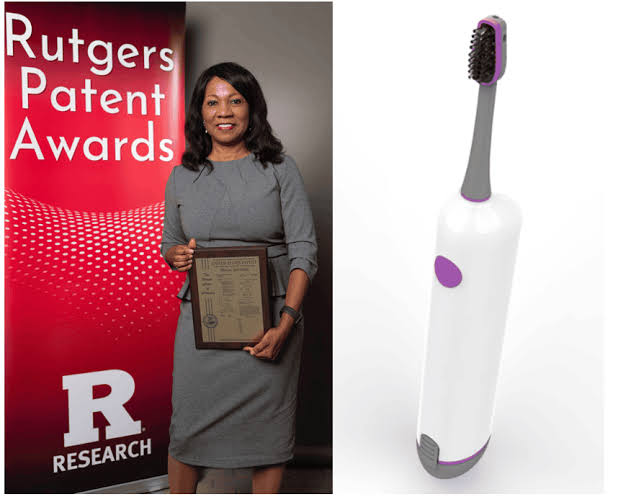
A groundbreaking toothbrush developed at Rutgers University School of Dental Medicine could change the way millions of people brush their teeth. Designed by Dr. Maxine Strickland, MPH, Associate Professor of Diagnostic Sciences, the innovative device—called MaxVac—combines toothbrushing with built-in suction to reduce the risk of swallowing toothpaste and other potentially harmful oral fluids.
The invention is aimed at improving oral hygiene while protecting vulnerable populations, including young children, elderly individuals, patients with neurological disorders, and people with physical or developmental disabilities.
Meet MaxVac: A Toothbrush with Built-In Suction
The newly developed MaxVac toothbrush addresses these challenges by combining two functions into a single handheld device:
- Brushing teeth effectively
- Simultaneously suctioning excess toothpaste, saliva, and oral fluids
Instead of requiring patients to spit repeatedly, the toothbrush continuously removes liquids during brushing, making the process safer and more comfortable.
According to Rutgers researchers, this technology may significantly improve oral hygiene for individuals who have difficulty rinsing or expectorating independently.
Inspired by Years of Pediatric Dentistry
The idea for MaxVac originated from Dr. Strickland’s years of experience as a pediatric dentist. While establishing a dental clinic for patients with disabilities, she frequently encountered children and adults who struggled with swallowing and maintaining oral hygiene safely.
Recognizing the limitations of conventional toothbrushes, she envisioned a device that could brush and remove fluids simultaneously, reducing both discomfort and health risks.
Potential Benefits
The MaxVac toothbrush may offer several advantages:
- Reduces accidental swallowing of toothpaste
- Removes saliva and oral secretions while brushing
- May lower the risk of aspiration pneumonia
- Improves oral hygiene in medically compromised patients
- Makes brushing easier for caregivers
- Suitable for hospital, nursing home, and home-care settings
Researchers also believe it could be useful during routine dental treatment where continuous suction is often required.
Who Could Benefit?
The device is designed for a wide range of users, including:
- Young children learning to brush
- Individuals with autism spectrum disorder
- Patients with cerebral palsy
- Stroke survivors
- Parkinson’s disease patients
- Individuals with spinal cord injuries
- Elderly adults
- Nursing home residents
- Hospitalized patients
- Individuals with swallowing disorders (dysphagia)
From Concept to Patent
Transforming the idea into a working prototype required collaboration between Dr. Strickland, engineers, and Rutgers innovation specialists.
Development was supported through a Rutgers TechAdvance Grant, enabling the creation of the first handheld prototype.
The initial version, patented in May 2024, functions as a suction attachment that fits onto an existing toothbrush.
Researchers are also developing a second-generation standalone powered toothbrush, supported by funding from the U.S. National Science Foundation (NSF). This advanced version is currently awaiting patent approval.
Clinical Plans
Dr. Strickland plans to begin pilot testing in 2026, initially evaluating MaxVac in a hospital caring for patients with neurological impairments.
Additional clinical collaborations are expected with hospitals treating patients recovering from spinal cord injuries.
These studies will help determine the toothbrush’s effectiveness, ease of use, patient comfort, and potential impact on reducing oral and respiratory complications.
Reference
- Rutgers University News. Innovation Awards and MaxVac Toothbrush Announcement (October 2024).
- https://wrnjradio.com/rutgers-professor-develops-suction-powered-toothbrush-to-combat-health-risks-of-swallowing-toothpaste/