For years, restoring severely damaged front teeth after root canal treatment has often meant placing a post inside the root canal, building a core, and covering the tooth with a crown. While this approach has long been considered the standard of care, it comes with a drawback—additional removal of tooth structure during post placement, which may increase the risk of root fracture in already weakened teeth.
Now, a new study suggests that a simpler and more conservative alternative, known as an endocrown, may perform just as well when restoring heavily compromised anterior teeth.
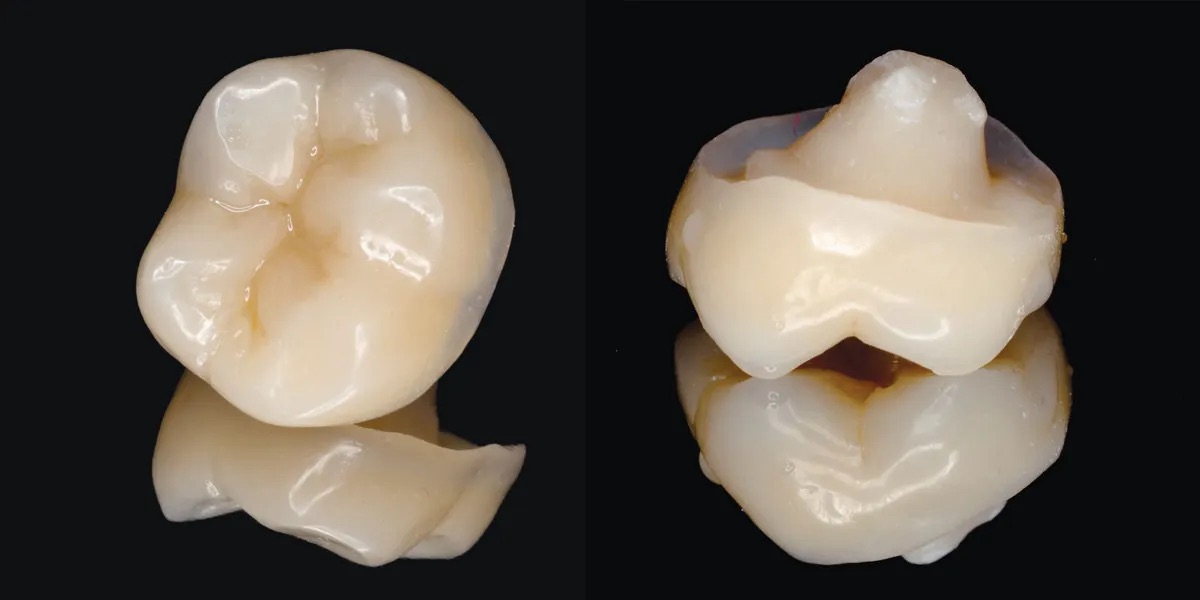
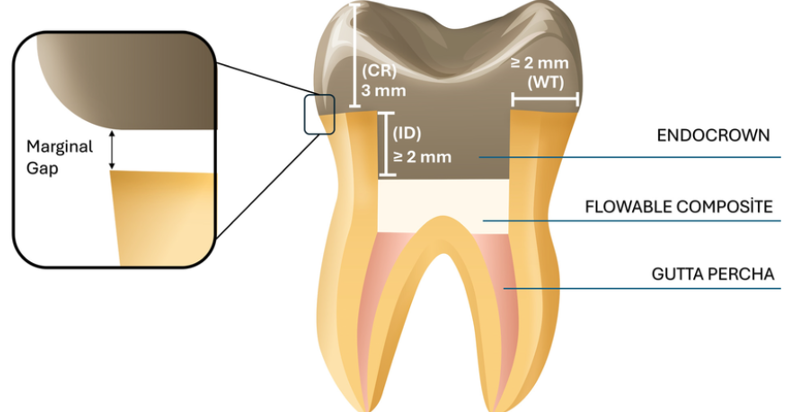
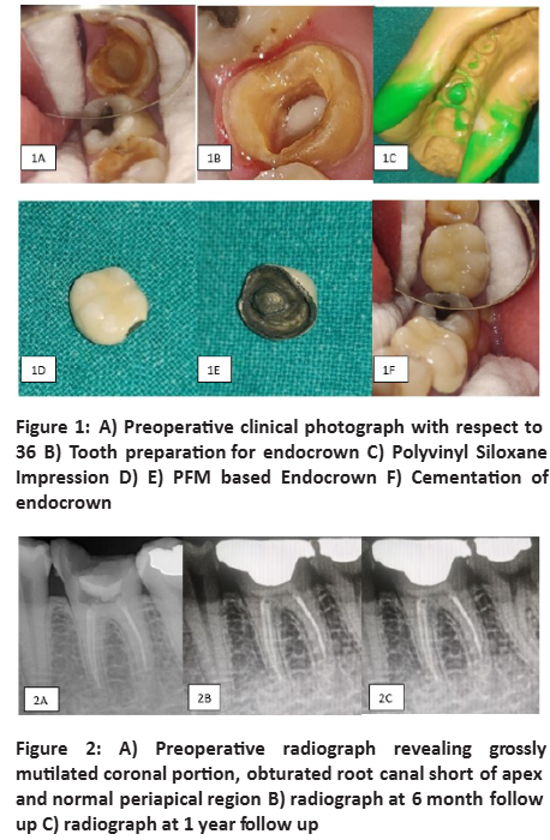
An endocrown is a single-piece ceramic restoration used to rebuild a tooth that has undergone root canal treatment, especially when a large amount of tooth structure has been lost.
Unlike traditional restorations, an endocrown does not require a post to be placed inside the root canal. Instead, it gains retention from the pulp chamber (the hollow space inside the tooth left after root canal treatment) and is bonded to the remaining tooth structure using adhesive cement.
Why This Matters
Root canal-treated teeth are often structurally weakened due to extensive decay, trauma, or previous restorations. Restoring these teeth successfully is essential not only for aesthetics but also for long-term function and durability.
Traditionally, dentists have relied on post-and-core restorations to reinforce these teeth. However, advances in adhesive dentistry have led to growing interest in endocrowns—a restoration that eliminates the need for an intraradicular post and instead uses the pulp chamber for retention.
The question researchers wanted to answer was simple:
Can endocrowns provide outcomes comparable to conventional post-and-core restorations in severely damaged front teeth?
Inside the Research
Researchers from Tishreen University evaluated twenty extracted maxillary central incisors that had undergone root canal treatment and exhibited significant structural loss.
The teeth were divided into two groups:
Group 1: Endocrown Restoration
- Restored using a single ceramic endocrown.
- No post was placed inside the root canal.
- Retention was achieved through adhesive bonding and the pulp chamber.
Group 2: Post-and-Core Restoration
- Restored using quartz fiber posts.
- Core build-up performed before crown placement.
- Represented the conventional restorative approach.
To simulate clinical conditions, all specimens were mounted at a 45-degree angle and subjected to increasing mechanical forces until failure occurred.
What Did the Study Find?
The researchers found no statistically significant difference between the two restorative approaches regarding fracture patterns and failure location.
Endocrown Group
The majority of failures were considered favorable, meaning the tooth could potentially be repaired after fracture.
Key findings included:
- 80% of failures were favorable.
- Fractures occurred at various locations.
- Catastrophic root fractures were uncommon.
Post-and-Core Group
Most failures occurred within the restoration rather than the root structure itself.
Key findings included:
- 60% of failures were favorable.
- Restoration fracture was the most common failure mode.
- Severe root damage was relatively rare.
Researchers attributed this to the quartz fiber posts, which possess mechanical properties similar to natural dentin and help distribute stresses more evenly throughout the tooth.
Why Endocrowns Are Gaining Attention
One of the biggest advantages of endocrowns is their conservative nature.
Unlike traditional post-retained restorations, endocrowns do not require preparation of the root canal for post placement. This means more natural tooth structure can be preserved.
Potential benefits include:
Less removal of healthy dentin
Reduced treatment complexity
Shorter chairside procedures
Easier retreatment if future endodontic therapy becomes necessary
Lower risk of weakening the root during preparation
Improved preservation of remaining tooth structure
As modern dentistry increasingly emphasizes minimally invasive treatment, these advantages are becoming more clinically relevant.
What Are the Limitations?
Although the findings are encouraging, the researchers emphasized that the study was conducted under laboratory conditions.
Several factors encountered in the oral environment were not replicated, including:
- Long-term chewing cycles
- Thermal changes from hot and cold foods
- Salivary effects
- Occlusal variations
- Parafunctional habits such as bruxism
In addition, the sample size was relatively small, involving only twenty teeth.
For these reasons, larger clinical studies with long-term follow-up are needed before definitive recommendations can be made.
Clinical Takeaway
The results suggest that endocrowns may be a reliable restorative option for severely compromised root-treated anterior teeth. Their ability to preserve natural tooth structure while demonstrating fracture behavior comparable to traditional post-and-core restorations makes them an attractive alternative for selected clinical cases.
While conventional post-and-core techniques remain an important treatment option, this study highlights the growing potential of minimally invasive restorations in modern dental practice.
Referance
Failure Patterns of Severely Compromised Endodontically Treated Anterior Teeth: A Comparative In Vitro Study of Two Restorative Approaches
Endocrown: A Substitute Approach To Post And Core For Rehabilitation Of Endodontically Treated Tooth
Stress Distribution on Endodontically Treated Anterior Teeth Restored via Different Ceramic Materials with Varying Post Lengths Versus Endocrown—A 3D Finite Element Analysis