
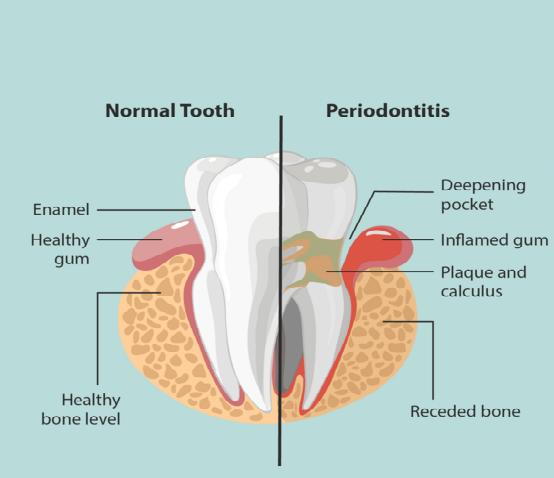
Gum disease is often blamed on poor oral hygiene alone, but growing scientific evidence shows that what happens in the body can strongly influence what happens in the mouth. One of the most important emerging links in dental research is the connection between obesity and periodontal (gum) disease.
A large open-access systematic review published in the International Journal of Environmental Research and Public Health analyzed global research to understand whether obesity increases the risk of gum disease in adults. The findings are changing how dentists view prevention and treatment.
What the Research Found
The review evaluated 15 observational studies involving more than 6,600 adults from multiple countries. Most of these studies showed a clear association between higher body mass index (BMI) and increased severity of periodontal disease.
Key findings include:
- Adults with obesity were more likely to have deeper gum pockets and greater attachment loss
- Several studies reported 2–3 times higher risk of periodontitis in obese individuals
- Some evidence suggested women with obesity may be at higher risk than men
- Increased tooth loss and gum bleeding were also observed in some obese populations
These results support the idea that obesity should be considered a modifiable risk factor for gum disease, alongside smoking and diabetes.
Why Obesity Affects Gum Health
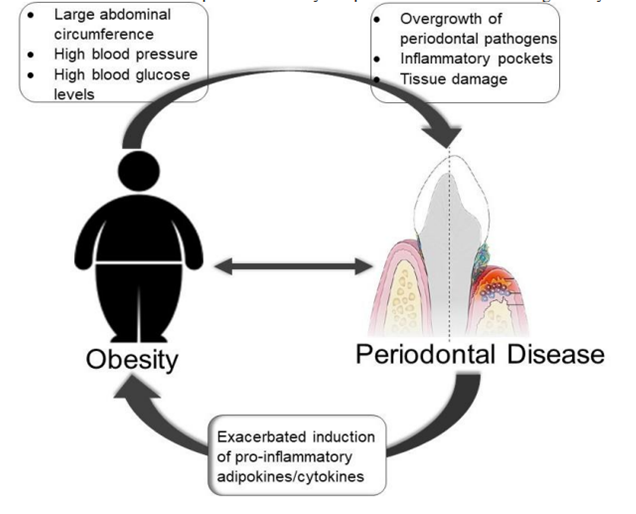
The connection goes beyond body weight alone. Obesity causes chronic low-grade inflammation throughout the body. Fat tissue is not just stored energy — it acts like an endocrine organ, releasing inflammatory chemicals called adipokines.
In people with obesity:
- Pro-inflammatory markers such as TNF-α and IL-6 are elevated
- Immune responses become dysregulated
- Bone metabolism is altered, increasing the risk of bone loss around teeth
These systemic changes make gum tissues more vulnerable to bacterial attack, accelerating periodontal destruction.
BMI and Periodontal Risk
Body Mass Index (BMI) is the most commonly used measure of obesity. According to the World Health Organization:
- BMI ≥ 25 = overweight
- BMI ≥ 30 = obese
The review recommends that BMI assessment should become part of routine dental risk evaluation, allowing dentists to provide more personalized preventive care.
This research highlights a shift in dentistry toward a whole-body health approach. Managing gum disease may require more than scaling and brushing instructions – it may involve lifestyle counselling and collaboration with medical professionals.
Reference Article
- Obesity and Periodontitis: Systematic Review (MDPI)
This review of multiple observational studies found a significant association between higher body mass index (BMI) and periodontal disease risk, suggesting clinicians should consider obesity when evaluating gum disease risk. MDPI
Link: https://www.mdpi.com/1660-4601/19/19/12684 - Association Between Obesity and Periodontal Disease – Systematic Review (PubMed)
A comprehensive review of observational and clinical studies reported that overweight/obese individuals often have higher rates of periodontitis, likely because of chronic inflammation linked with excess fat. PubMed
Link: https://pubmed.ncbi.nlm.nih.gov/29053651/ - Obesity Raises Risk of Gum Disease via Bone-Destroying Cells (ScienceDaily & University at Buffalo)
Research in animal models shows that obesity-related chronic inflammation increases cells that break down bone tissue, which may worsen periodontal bone loss — a hallmark of gum disease. ScienceDaily+1