That future has officially arrived in Singapore.
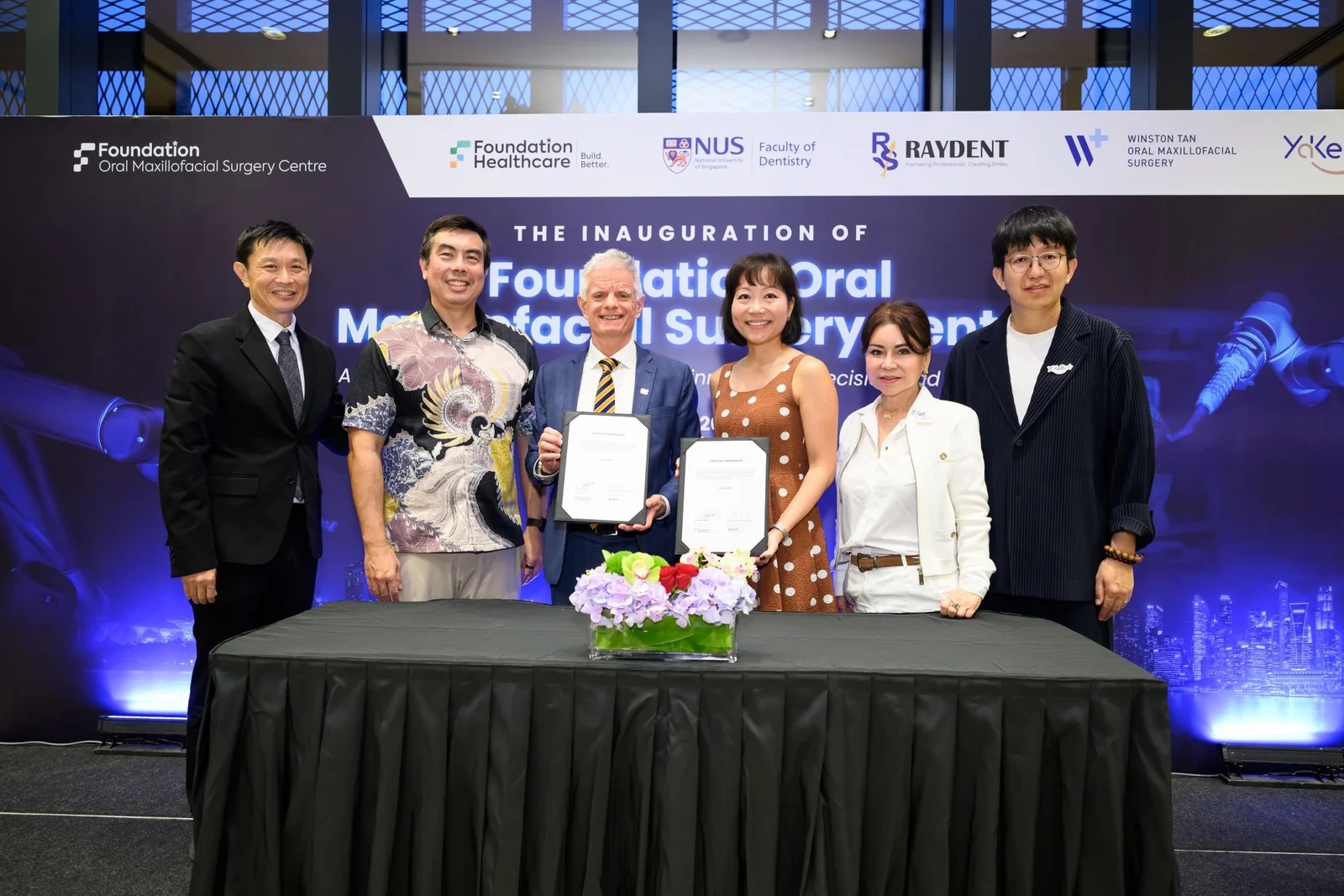
Foundation Healthcare Holdings, Singapore’s largest private multi-specialty healthcare group, has launched the Foundation Oral Maxillofacial Surgery Centre at Farrer Park Medical Centre, introducing Singapore’s first autonomous dental implant surgical robot. The new centre combines specialist oral and maxillofacial surgeons, advanced digital treatment planning, and robotic-assisted implant technology to improve precision, safety, and predictability—especially in complex implant cases.
More than just a technological milestone, the launch signals Singapore’s commitment to integrating robotics into routine dental care while ensuring that innovation is backed by clinical expertise, research, and education.
A New Benchmark for Implant Dentistry
The Foundation Oral Maxillofacial Surgery Centre has been established as a dedicated specialist facility for advanced oral and maxillofacial care.
Its goal is to bring together:
- Experienced oral and maxillofacial surgeons
- Comprehensive digital implant planning
- Advanced three-dimensional imaging
- Robotic-assisted implant surgery
- Evidence-based patient care
According to Foundation Healthcare, the technology is intended to deliver safer, more precise, and more predictable implant treatment, particularly for patients with anatomically challenging or highly complex clinical cases.
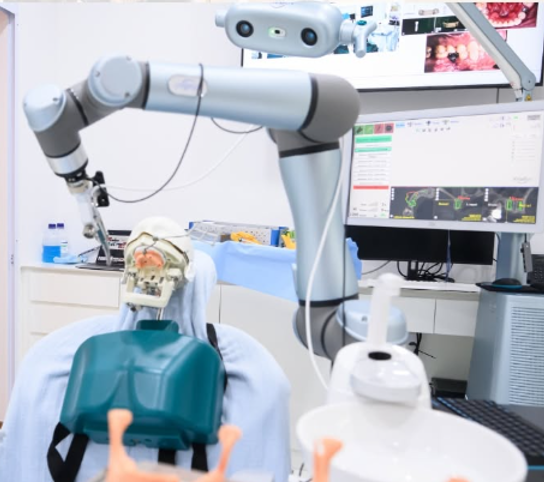
How Does the Autonomous Implant Robot Work?
The robotic system was developed by Beijing Yakebot Technology, one of the pioneers in robotic dental implant surgery.
Unlike conventional static surgical guides or navigation systems, the robot integrates:
- Three-dimensional digital implant planning
- Precise virtual treatment mapping
- Autonomous surgical execution
- Continuous monitoring by the operating surgeon
Every implant position is digitally planned before surgery, and the robot follows the approved surgical pathway with exceptional precision while the surgeon maintains complete supervision and control throughout the procedure.
The technology is designed to enhance surgical accuracy rather than replace clinical judgment.
Internationally Recognized Technology
The robotic platform has already achieved significant international regulatory recognition.
It is the:
- First dental surgical robot to receive European CE Certification
- First robotic implant system approved through China’s National Medical Products Administration (NMPA) Innovative Medical Device pathway
These approvals reflect the growing confidence in robotic technologies for dental implant surgery and demonstrate that the system has undergone stringent regulatory evaluation before clinical implementation.
A Landmark Collaboration with the National University of Singapore
Alongside the launch, Foundation Healthcare announced a strategic partnership with the National University of Singapore (NUS) Faculty of Dentistry.
The collaboration aims to advance:
- Clinical research in robotic implant surgery
- Undergraduate and postgraduate dental education
- Training for clinicians adopting robotic workflows
- Responsible integration of robotic technologies into clinical practice
- Evidence-based innovation in oral and maxillofacial surgery
Rather than introducing robotics as a standalone technology, the partnership emphasizes careful clinical governance, scientific validation, and professional training to ensure patient safety remains the highest priority.
Robots Won’t Replace Dentists—They’ll Empower Them
One important message from this launch is that the robot operates under continuous surgeon supervision.
Clinical examination, diagnosis, treatment planning, patient communication, management of surgical complications, and final decision-making remain entirely in the hands of the oral surgeon.
The robot simply executes the approved digital plan with remarkable consistency and precision.
In other words, the surgeon remains the decision-maker—the robot becomes the precision instrument.
The Future of Implant Dentistry Has Already Begun
Artificial intelligence, digital workflows, navigation systems, and robotics are rapidly reshaping oral healthcare worldwide.
With the introduction of Singapore’s first autonomous dental implant surgical robot, implant dentistry enters another exciting phase where technology complements—not replaces—clinical expertise.
As research expands and more institutions adopt robotic systems, dentists can expect a future where implant placement becomes increasingly precise, predictable, and digitally integrated, ultimately improving outcomes for both clinicians and patients.
Reference
Foundation Healthcare launches Singapore’s first autonomous dental implant surgical robot