Restoring endodontically treated teeth remains one of the most challenging aspects of restorative dentistry. Once a tooth has undergone root canal therapy, the loss of tooth structure caused by decay, access cavity preparation, and previous restorations significantly reduces its ability to withstand normal occlusal forces. Choosing the appropriate restorative material therefore plays a critical role in determining the long-term prognosis of these teeth.
A recently published laboratory study provides valuable insights for clinicians by comparing the fracture resistance of several contemporary restorative materials used in endodontically treated premolars. The results indicate that CAD/CAM lithium disilicate endocrowns provide substantially greater resistance to fracture than commonly used direct composite restorations.
Why Restoration Choice Matters After Root Canal Treatment
Root canal therapy successfully eliminates pulpal infection, but it does not restore the lost structural integrity of the tooth. Endodontically treated premolars are particularly susceptible to cusp deflection and catastrophic fracture because of their relatively thin cuspal anatomy and the large amount of dentin often removed during cavity preparation.
For dentists, the primary restorative objective is not only replacing missing tooth structure but also ensuring that the restoration can withstand functional loading over many years while preserving as much remaining tooth tissue as possible.
Modern adhesive dentistry offers several treatment options, ranging from direct resin composites to indirect ceramic restorations. Understanding how these materials perform under stress is essential for evidence-based clinical decision-making.
Purpose of the Study
Researchers designed an in vitro investigation to compare the fracture resistance of four restorative approaches commonly considered for root canal-treated premolars:
- Self-adhesive bulk-fill resin composite
- Short fiber-reinforced composite with nanohybrid composite overlay
- Conventional nanohybrid composite
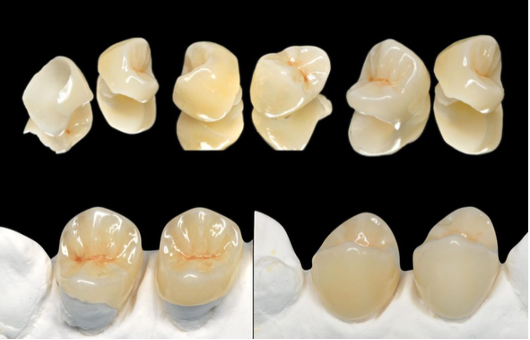
- CAD/CAM lithium disilicate endocrown
The objective was to determine which restorative option could best resist fracture under standardized laboratory loading conditions.
Study Design
The investigators selected 44 extracted human maxillary premolars, all of which received standardized root canal treatment followed by identical mesio-occlusal-distal (MOD) cavity preparations.
The specimens were randomly allocated into four equal groups.
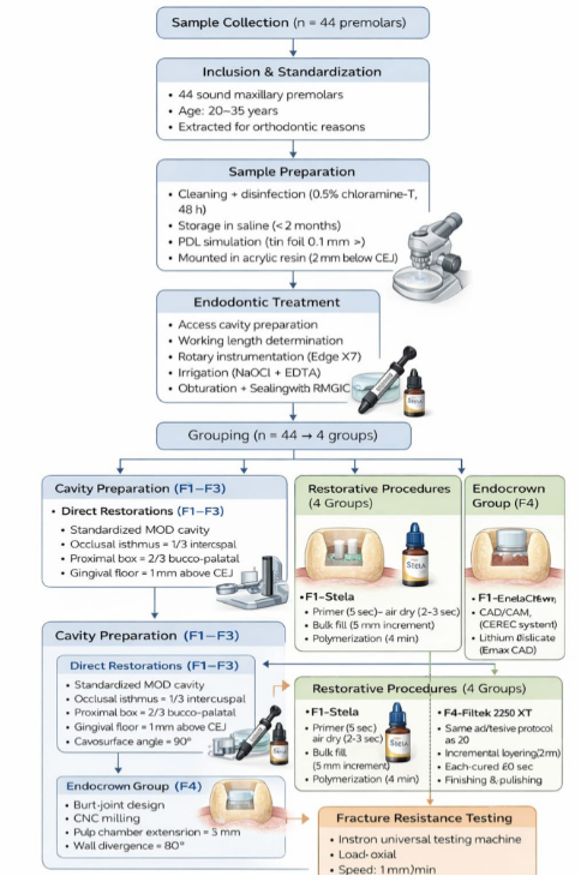
Group 1: Restored using a self-adhesive bulk-fill resin composite placed in a single increment.
Group 2: Restored with a short fiber-reinforced composite core covered by a nanohybrid composite occlusal layer.
Group 3: Restored entirely with a conventional nanohybrid composite.
Group 4: Restored using CAD/CAM-fabricated lithium disilicate endocrowns designed digitally and milled before adhesive cementation.
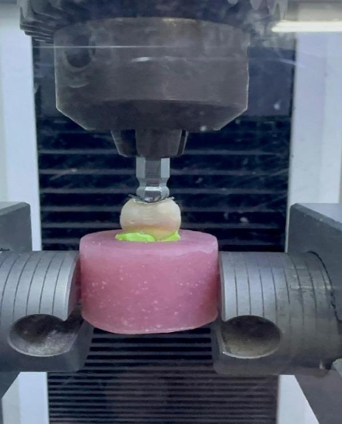
After restoration, every specimen underwent fracture resistance testing using a universal testing machine until structural failure occurred.
What Did the Researchers Find?
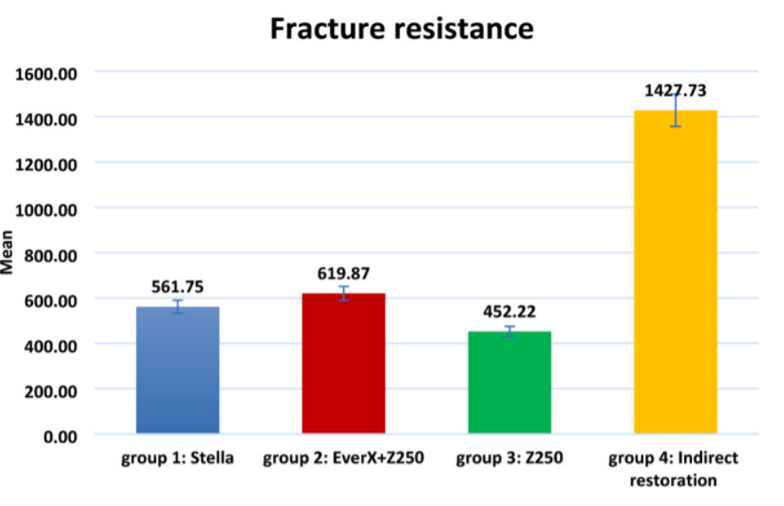
The lithium disilicate endocrowns demonstrated the highest fracture resistance by a considerable margin.
Mean Fracture Resistance
- Lithium disilicate endocrowns: 1427.73 N
- Fiber-reinforced composite + nanohybrid composite: 619.87 N
- Self-adhesive bulk-fill composite: 561.75 N
- Conventional nanohybrid composite: 452.22 N
Statistical analysis showed that lithium disilicate endocrowns significantly outperformed every direct restorative material included in the study. Among the direct restorations, the short fiber-reinforced composite achieved the highest average fracture resistance. However, the differences between the three direct restorative techniques were not statistically significant.
Clinical Interpretation for Dentists
From a restorative standpoint, these findings reinforce the growing clinical acceptance of lithium disilicate endocrowns for posterior endodontically treated teeth with extensive structural loss.
Unlike traditional full-coverage crowns that often require additional tooth reduction, endocrowns rely on adhesive bonding and utilize the pulp chamber for retention, making them a conservative restorative option.
Lithium disilicate also offers several advantages that extend beyond mechanical performance, including:
- Excellent flexural strength
- Superior fracture toughness
- Reliable adhesive bonding
- High esthetic quality with enamel-like translucency
- Excellent marginal adaptation using CAD/CAM workflows
- Reduced need for post placement in suitable cases
These characteristics make lithium disilicate endocrowns particularly attractive for restoring premolars and molars where both strength and esthetics are important.
What About Direct Composite Restorations?
Direct composite restorations continue to be an important treatment option, especially when cost, chairside efficiency, or preservation of tooth structure are primary considerations.
The study demonstrated that fiber-reinforced composite restorations tended to perform better than conventional composite restorations, suggesting that incorporating reinforcing fibers may improve stress distribution within weakened teeth.
Nevertheless, none of the direct restorative materials approached the fracture resistance achieved by lithium disilicate endocrowns.
Clinical Considerations Before Changing Practice
Although the results are encouraging, dentists should remember that this investigation was conducted under laboratory conditions.
Clinical success depends on numerous additional factors, including:
- Occlusal loading patterns
- Bruxism or parafunctional habits
- Remaining tooth structure
- Ferrule effect
- Isolation during adhesive procedures
- Operator technique
- Cementation protocol
- Long-term fatigue loading
- Oral environment and thermal cycling
Consequently, treatment planning should always consider individual patient factors rather than relying solely on laboratory fracture resistance values.
Key Clinical Takeaways
- Lithium disilicate endocrowns demonstrated the highest fracture resistance among all restorative techniques tested.
- Fiber-reinforced composite restorations performed better than conventional composite restorations but did not match ceramic endocrowns.
- Adhesively bonded lithium disilicate restorations appear to offer a durable and conservative solution for extensively damaged root canal-treated premolars.
- Direct composite restorations remain clinically useful in selected cases but may not provide the same level of mechanical reinforcement for heavily compromised teeth.
- Further long-term clinical trials are needed to confirm whether these laboratory findings translate into improved survival rates in everyday dental practice.
Reference
El Gezawy EAG, Bedair SS, Abbas KF, Algizawi S, Kamh R. Fracture behavior of endodontically treated premolars restored with direct and indirect restorations: an in vitro study. BMC Oral Health. 2026;26(1). DOI: 10.1186/s12903-026-08736-2.